
Where to Hang Art in Your Home: A Room-by-Room Guide
There’s a moment that happens in almost every home. You’ve chosen a piece you love, you’re holding it (or you’ve just unwrapped it), and you think… where on earth do I put this so it actually looks right?
The good news is this: hanging art isn’t about perfection. It’s about placement that feels balanced, intentional, and lived in. When it’s done well, art does more than “fill a wall”, it changes how a room feels. It can soften a space, add warmth, and quietly pull everything together.
This is a practical, room-by-room guide to help you decide where to hang art, how high, and what to watch out for, so your home feels calm, cohesive, and completely yours. It focuses on hanging fine art photography prints, pieces chosen to be lived with long-term rather than rotated seasonally.
If you are still deciding what style of image will suit your space, you may want to start with Choose the Perfect Print, it helps you narrow down mood, subject, and scale first.
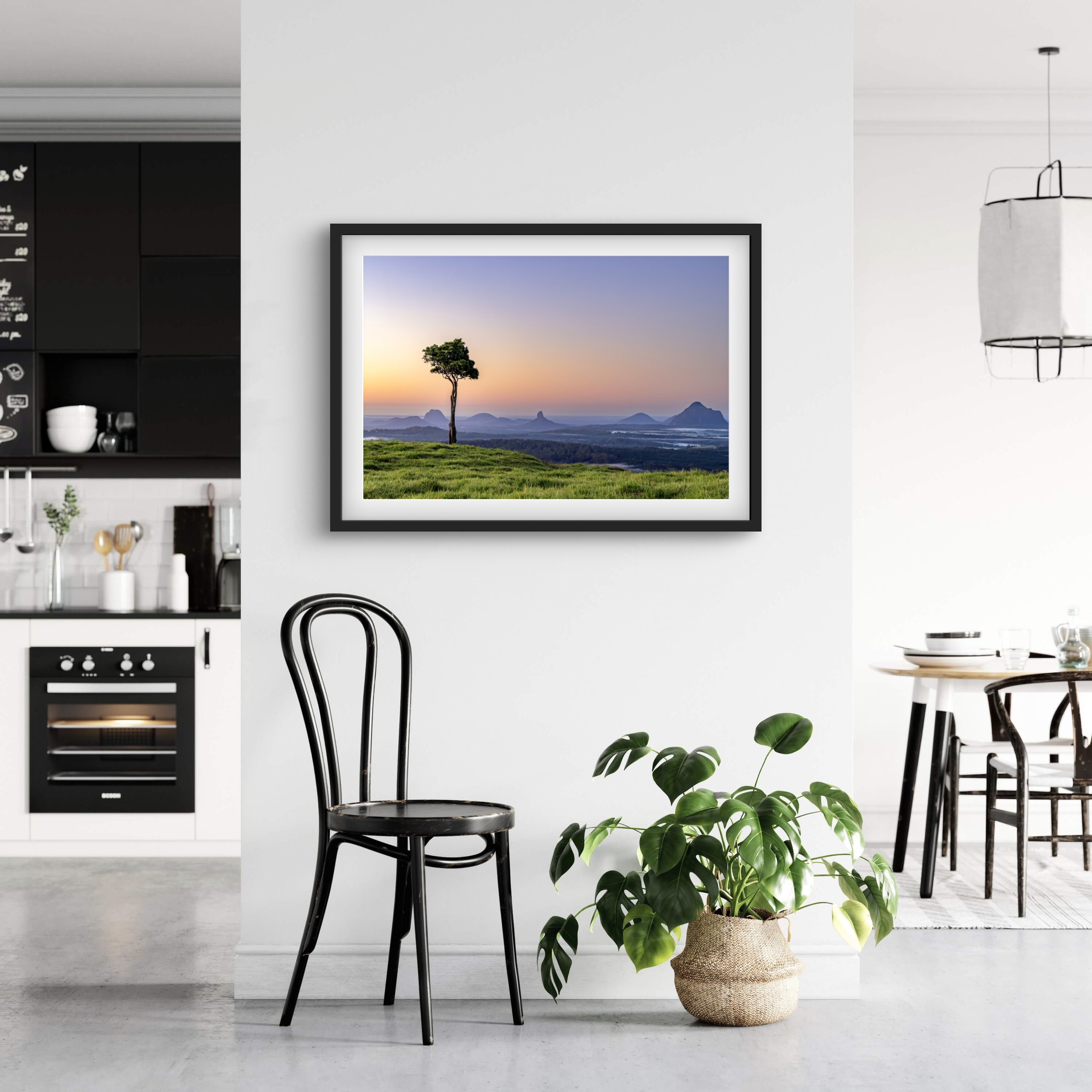
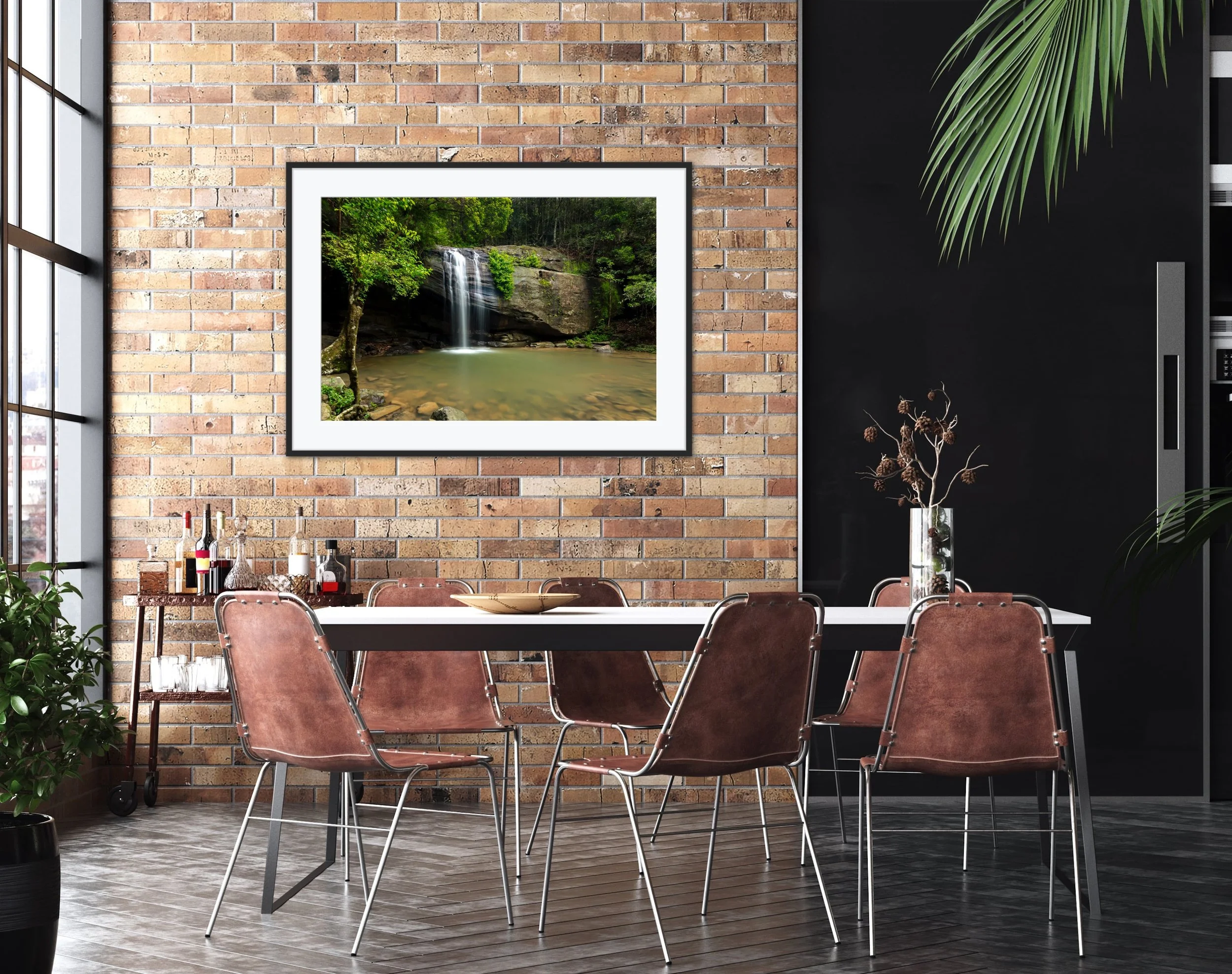
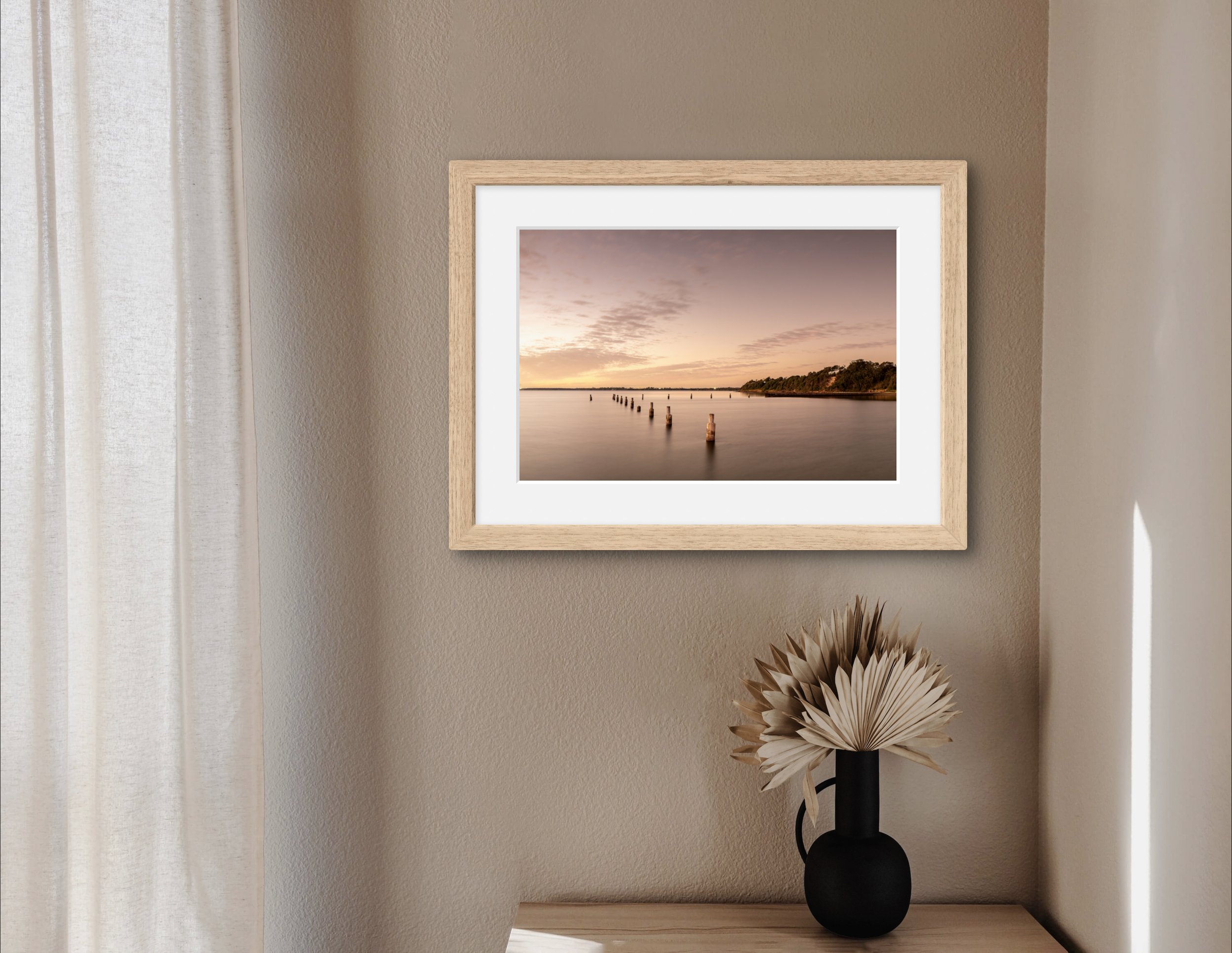
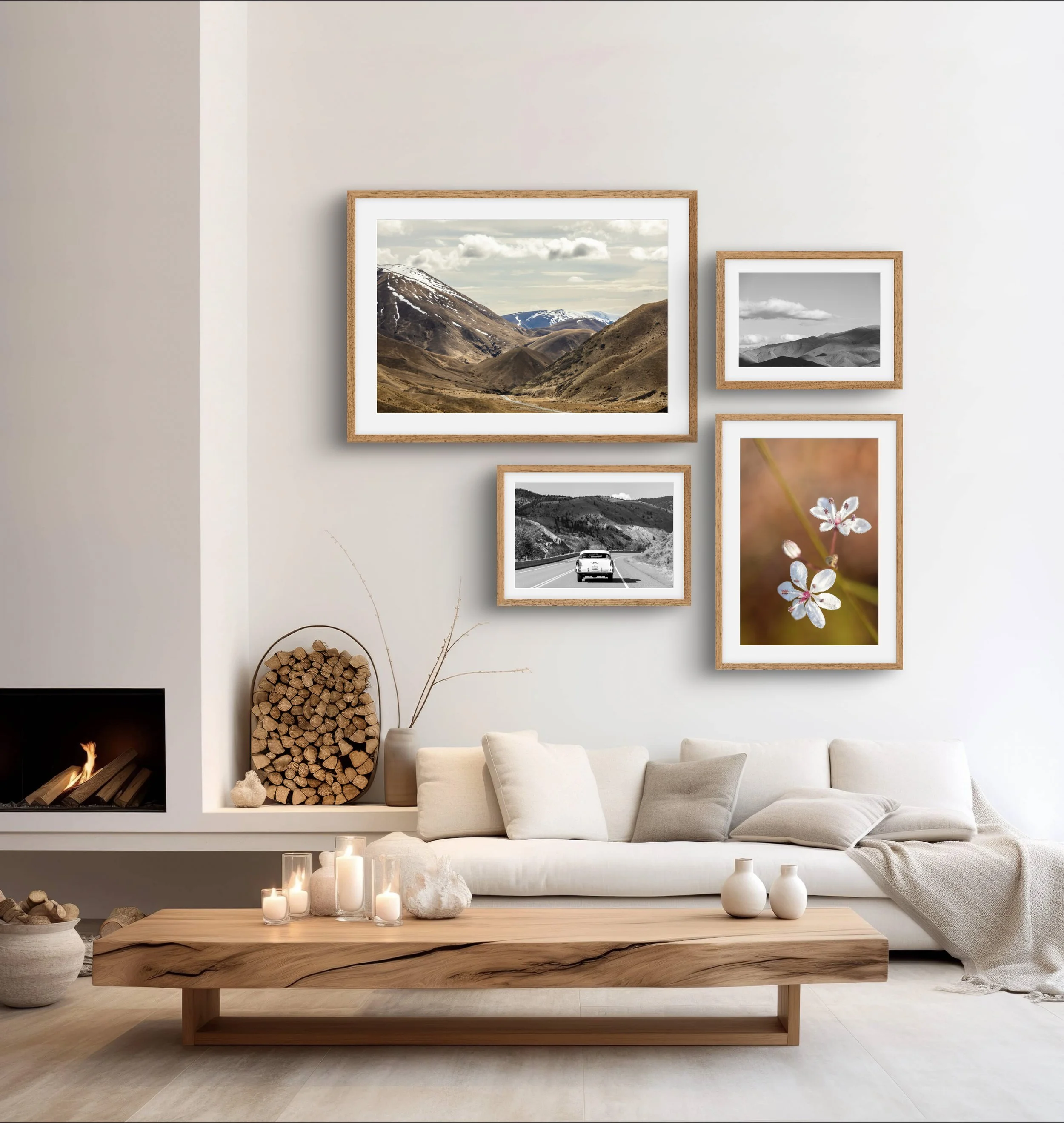
Before You Start: Simple Art Hanging Rules That Work in Every Room
1. Start with eye level (then adjust)
A helpful default is to hang art so the centre of the artwork sits around 145 cm from the floor. This height is commonly used when displaying fine art photography in galleries and residential spaces because it feels natural as you move through a room.
You can adjust slightly depending on furniture height or ceiling scale, but this guideline alone solves most “it feels too high” problems.
2. Hang art in relation to furniture, not the wall
Art almost always looks better when it belongs to something, a sofa, bed, console, sideboard, or desk. When it floats on a wall with nothing grounding it, it can feel disconnected.
A useful guide is for the artwork, or group of artworks, to be around two-thirds to three-quarters the width of the furniture beneath it.
3. Keep a consistent gap above furniture
When hanging art above a sofa, bedhead, console, or sideboard, aim to leave 15–25 cm between the top of the furniture and the bottom of the frame. This creates breathing room without pushing the artwork too high.
4. Think in moments, not single walls
Instead of asking “What should go on that wall?”, try thinking about where you want the room to pause. Entry corners, hallway transitions, and the space above key furniture pieces are often where art placement feels most intentional.
5. Be mindful of light
Avoid hanging artwork where strong direct sunlight hits it for long periods. In bright rooms, side walls often work better than sun-facing ones. When framing, quality glazing can also help protect prints over time. If you are weighing up presentation options, including glazing and matting, see Framed or Unframed, Choosing the Best Display Option for Your Fine Art Prints.
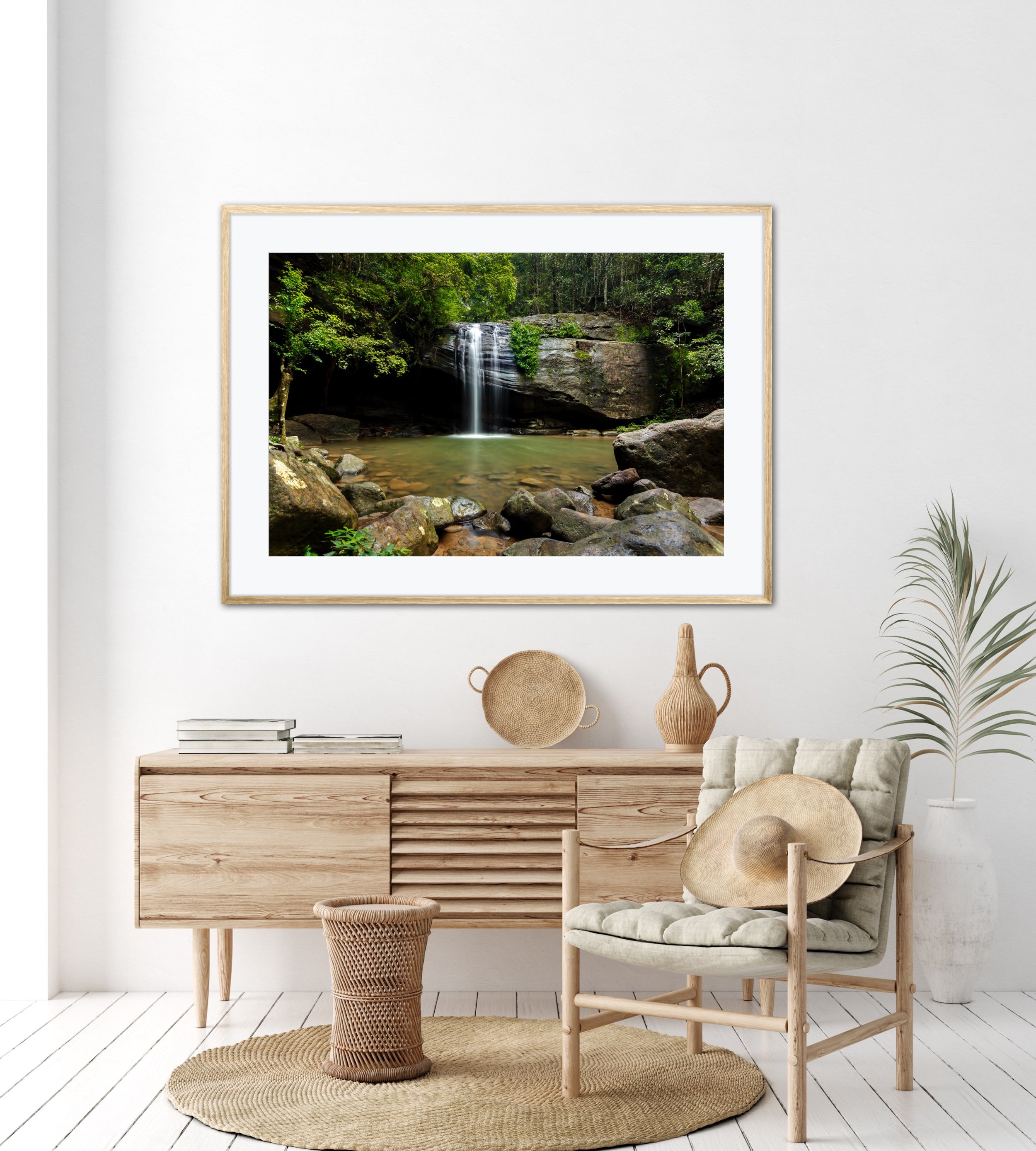
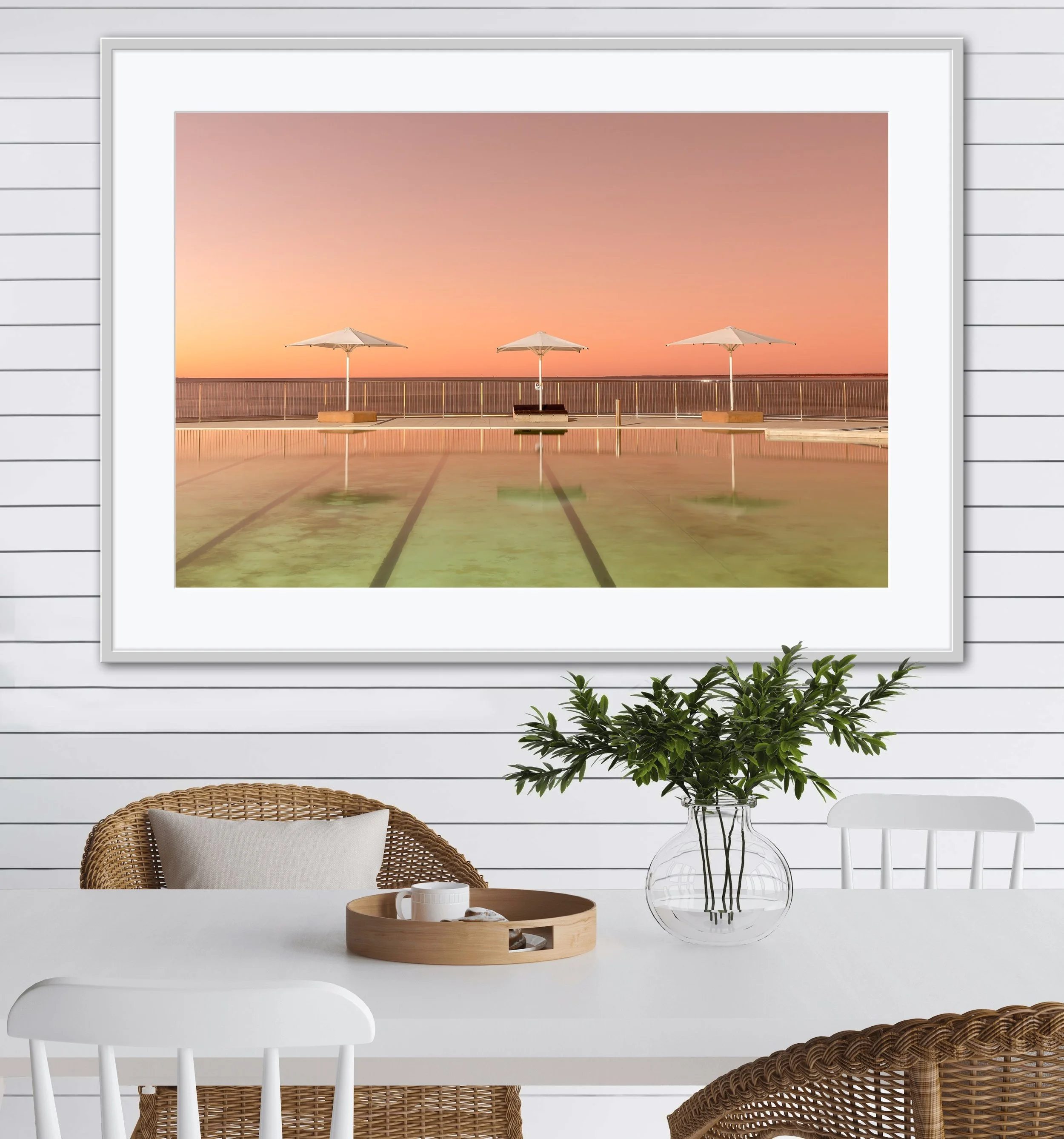
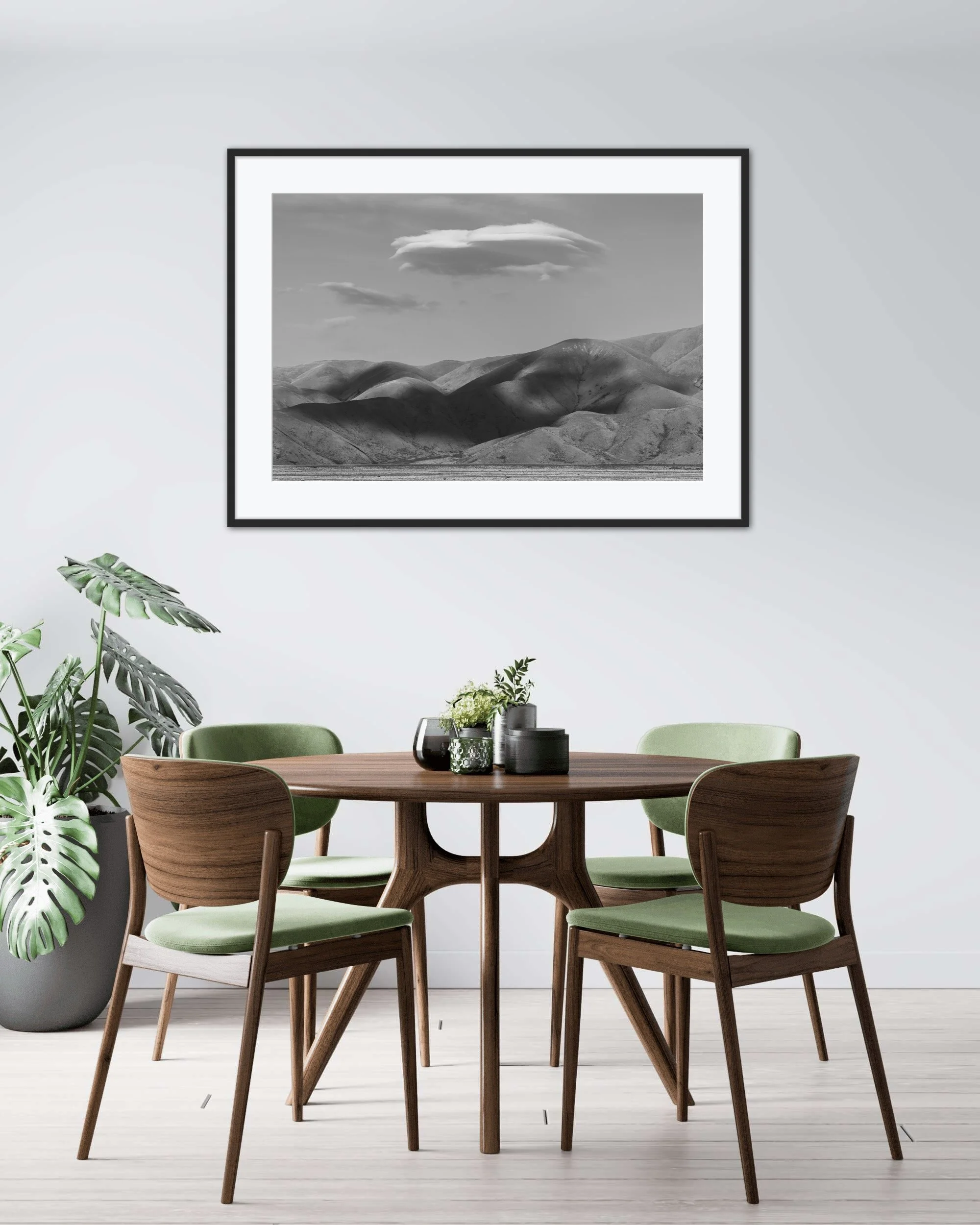
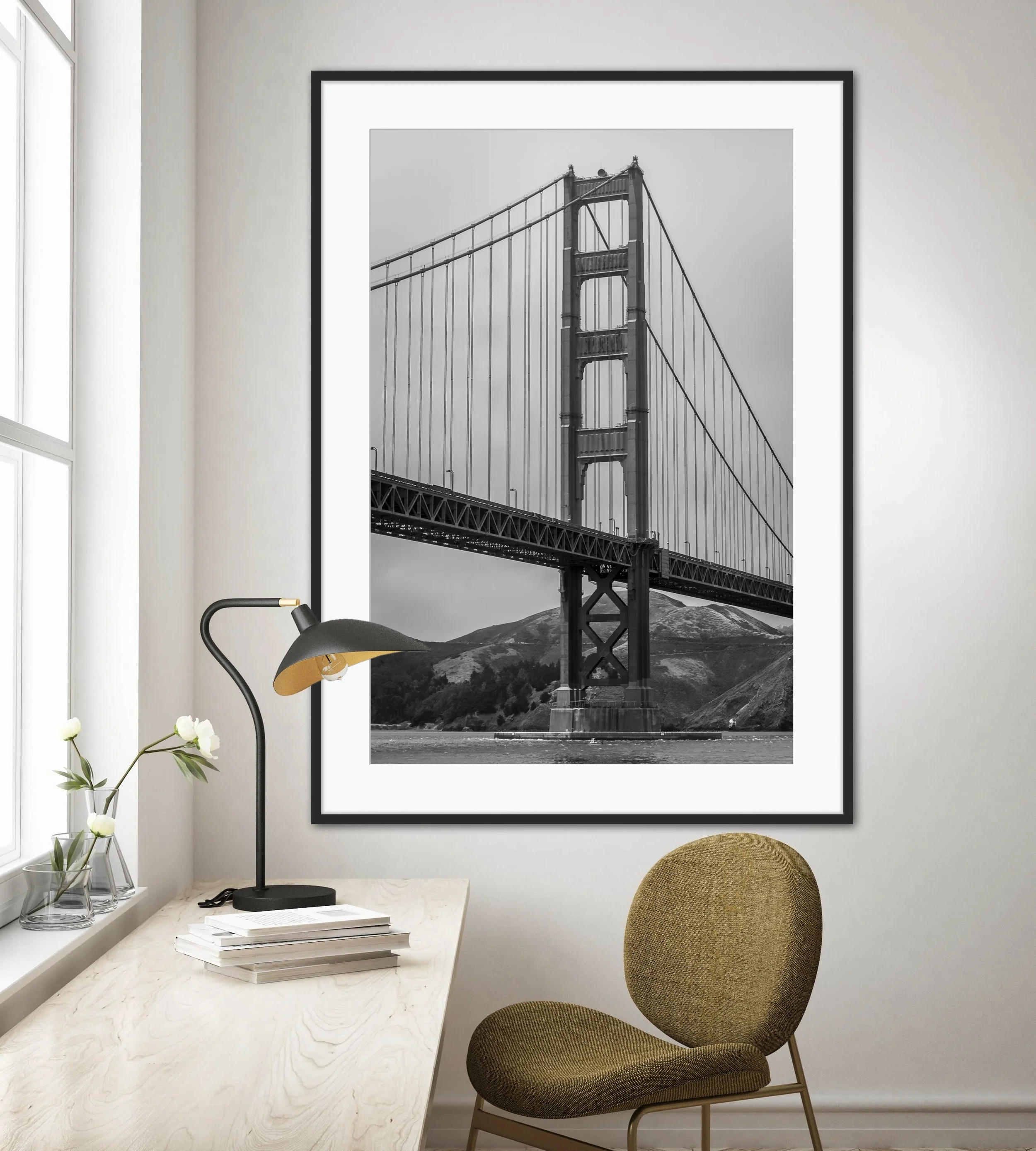
A Quick Art Placement Checklist
Before committing to hooks or nails, ask yourself:
Will this artwork be seen often?
Is the centre roughly at eye level?
Does it visually connect to nearby furniture?
Is the scale right for the wall and the room?
Is it protected from harsh sunlight, steam, or splashes?
Will it still look good in the evening light?
Where to Hang Art in Each Room of Your Home
Entryway and Hallway Art Placement
Hallways are an ideal place for fine art photography prints because repetition, tone, and pacing matter more than bold colour or trend. These are some of the most overlooked spaces for art, and some of the most effective.
Where to hang art in entryways and hallways
Above a console table or entry bench
On the wall you face as you walk in
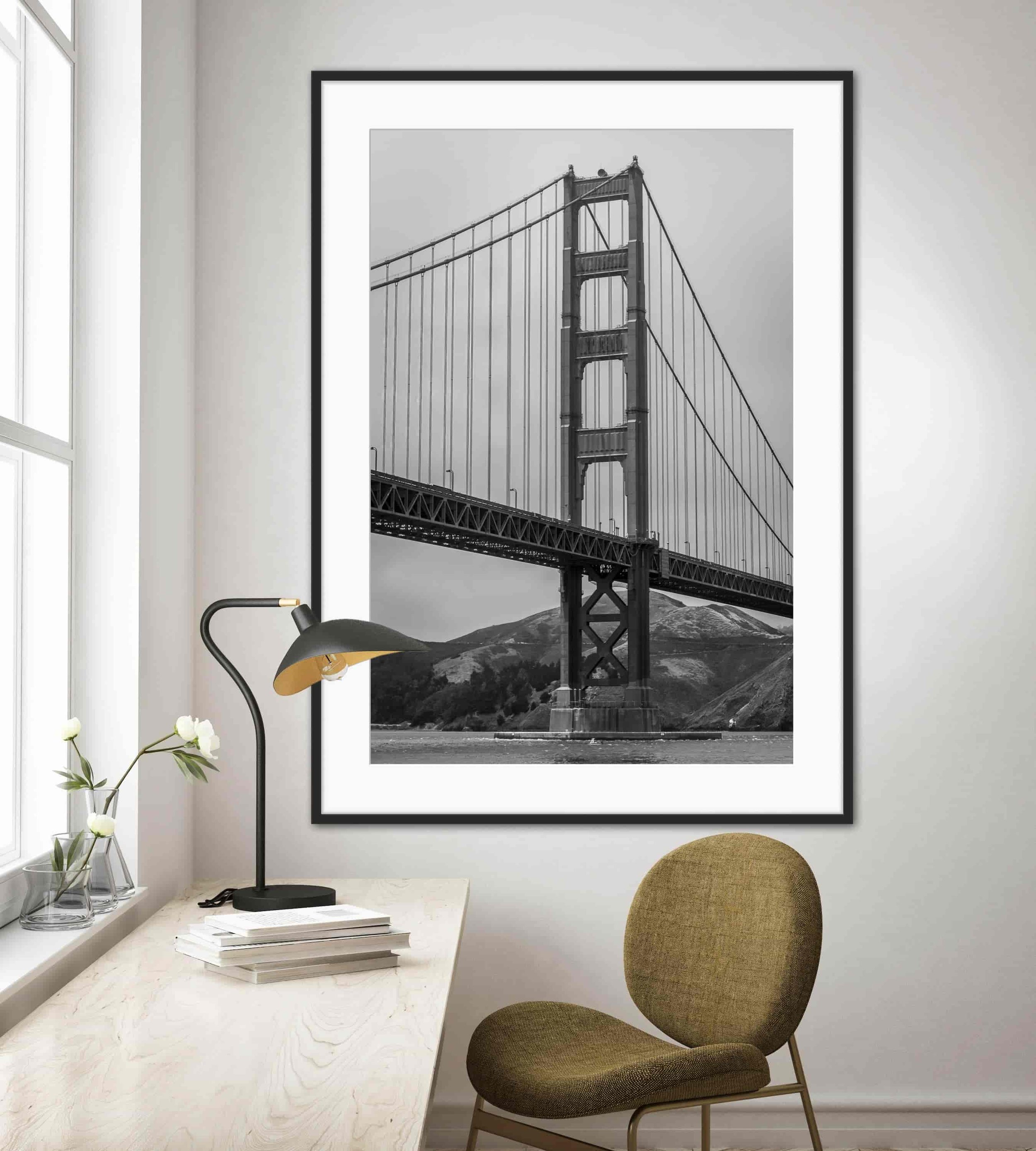
Along a hallway as a simple, evenly spaced series. This one is a personal favourite of mine. I get so many comments from people when they arrive in my home and see the series of three black and white prints of bridges, (the Golden Gate Bridge, Brooklyn Bridge, and Lion’s Gate Bridge), hanging along my hallway.
How to make hallway art feel intentional
Keep artwork at eye level, or slightly lower in narrow hallways
Maintain consistent spacing, around 5–8 cm between frames
Repeating similar tones or frame styles creates calm flow
A soft coastal or landscape print in the entry can immediately set the tone for the home, creating a sense of welcome as soon as you arrive.
(If you’re choosing artwork for this space, landscape or black and white collections often work beautifully here.)
Living Room Wall Art Placement
Most living rooms have one wall that naturally wants attention. Art helps anchor the space and bring everything together.
Best places to hang art in the living room
Above the sofa
Above a fireplace mantel
Above a sideboard or buffet
Behind a reading chair for a layered corner
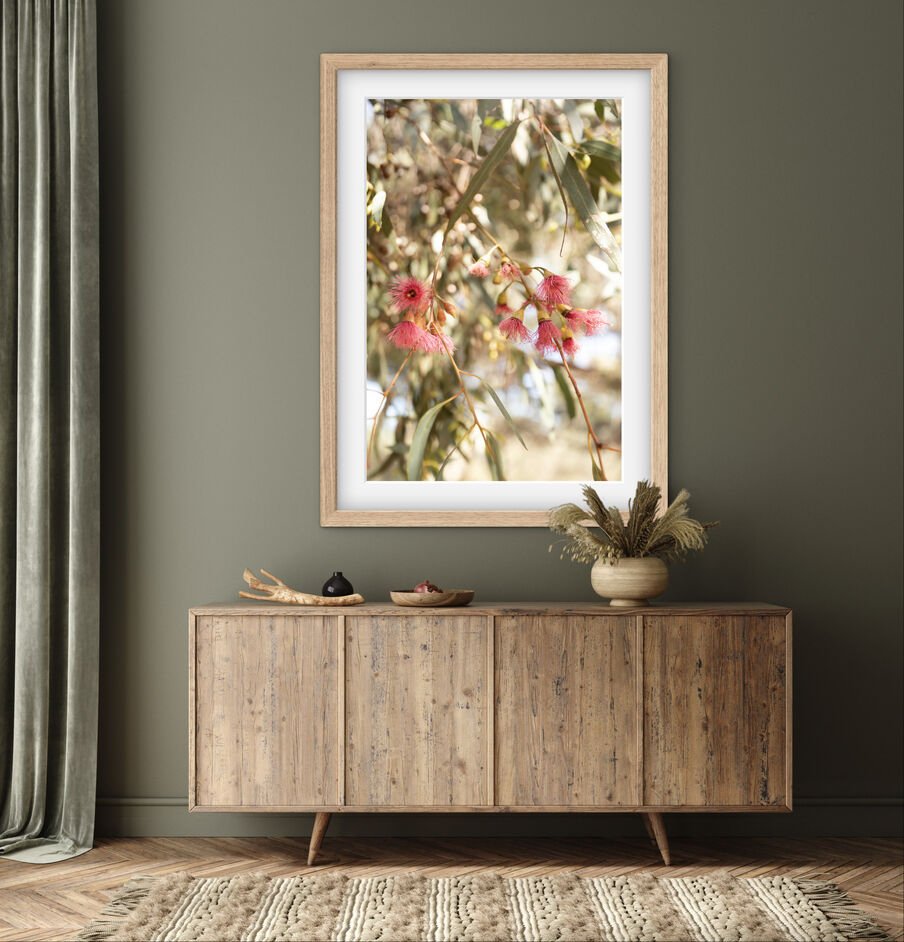
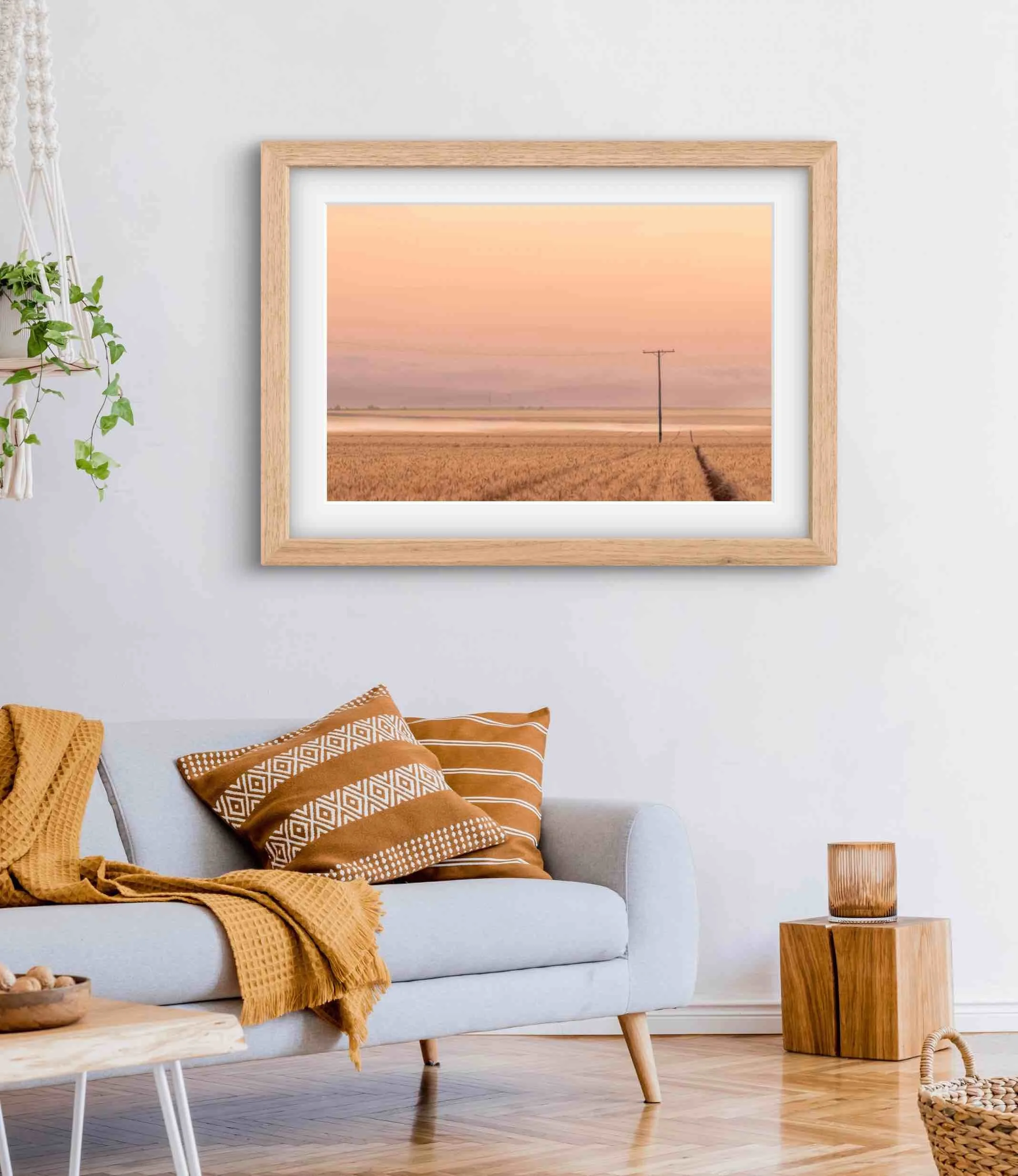
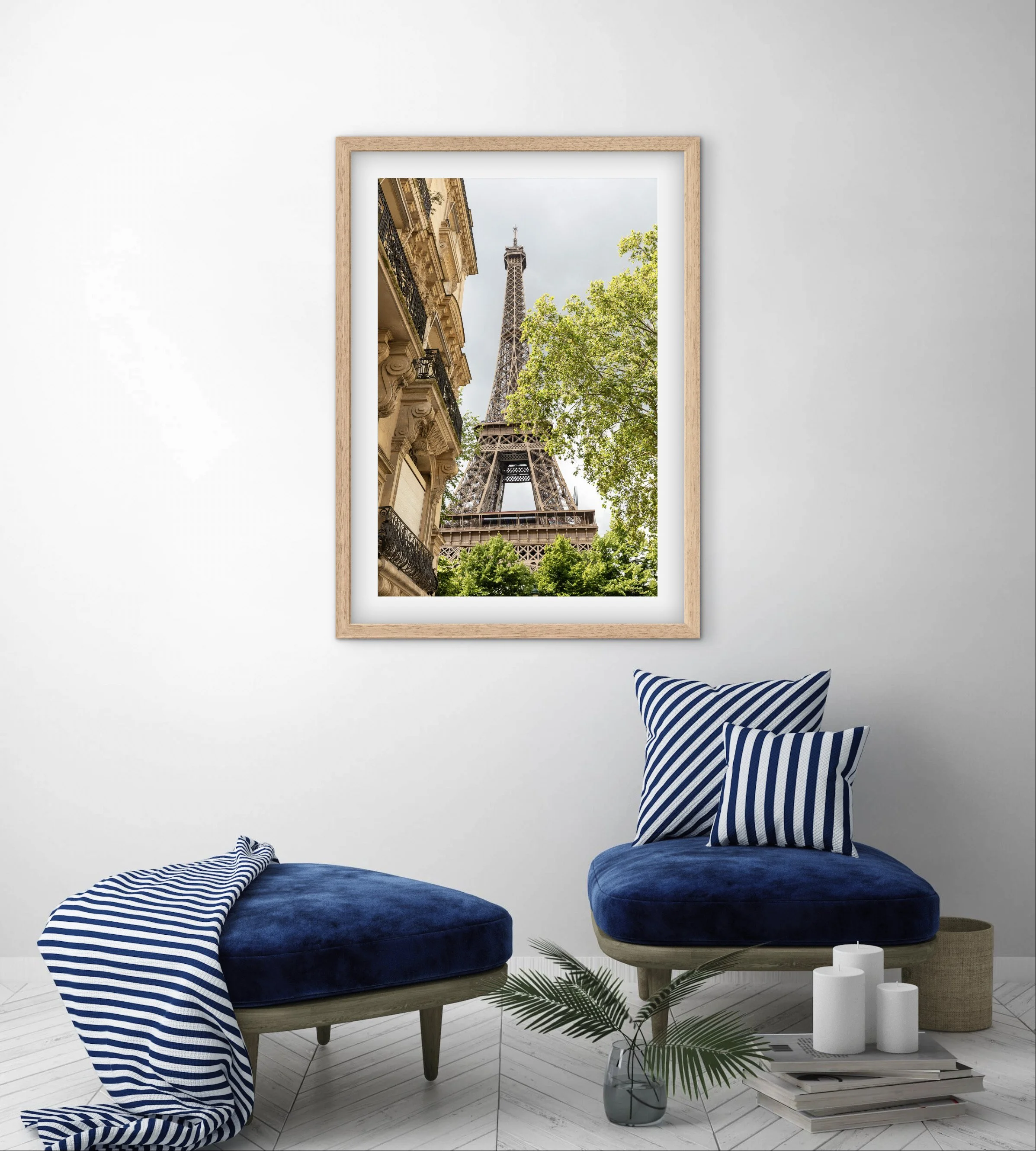
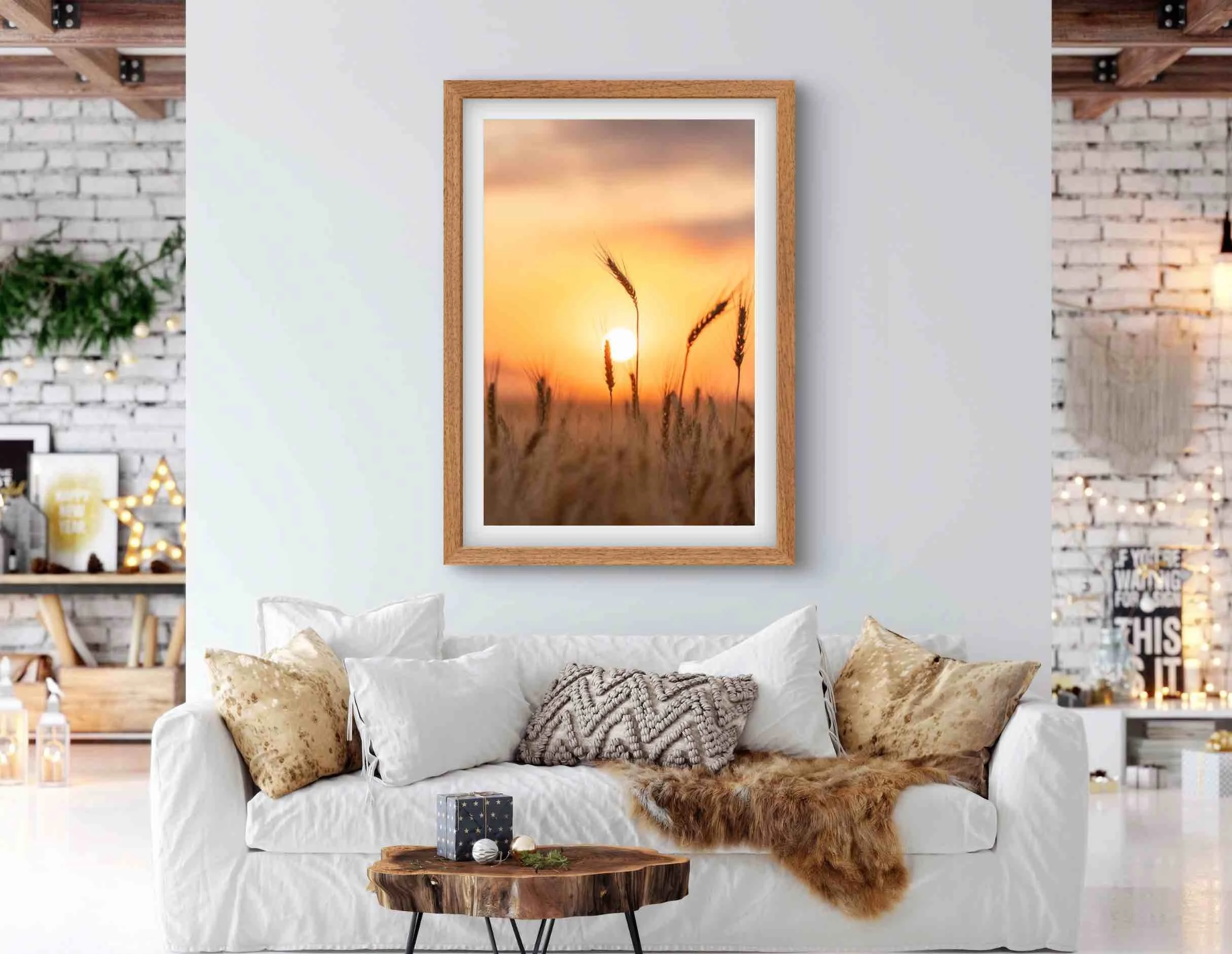
How to hang art above a sofa
Aim for artwork that is two-thirds to three-quarters the width of the sofa
Leave 15–25 cm between the top of the sofa and the bottom of the frame
Even in rooms with high ceilings, keep the artwork visually connected to the sofa
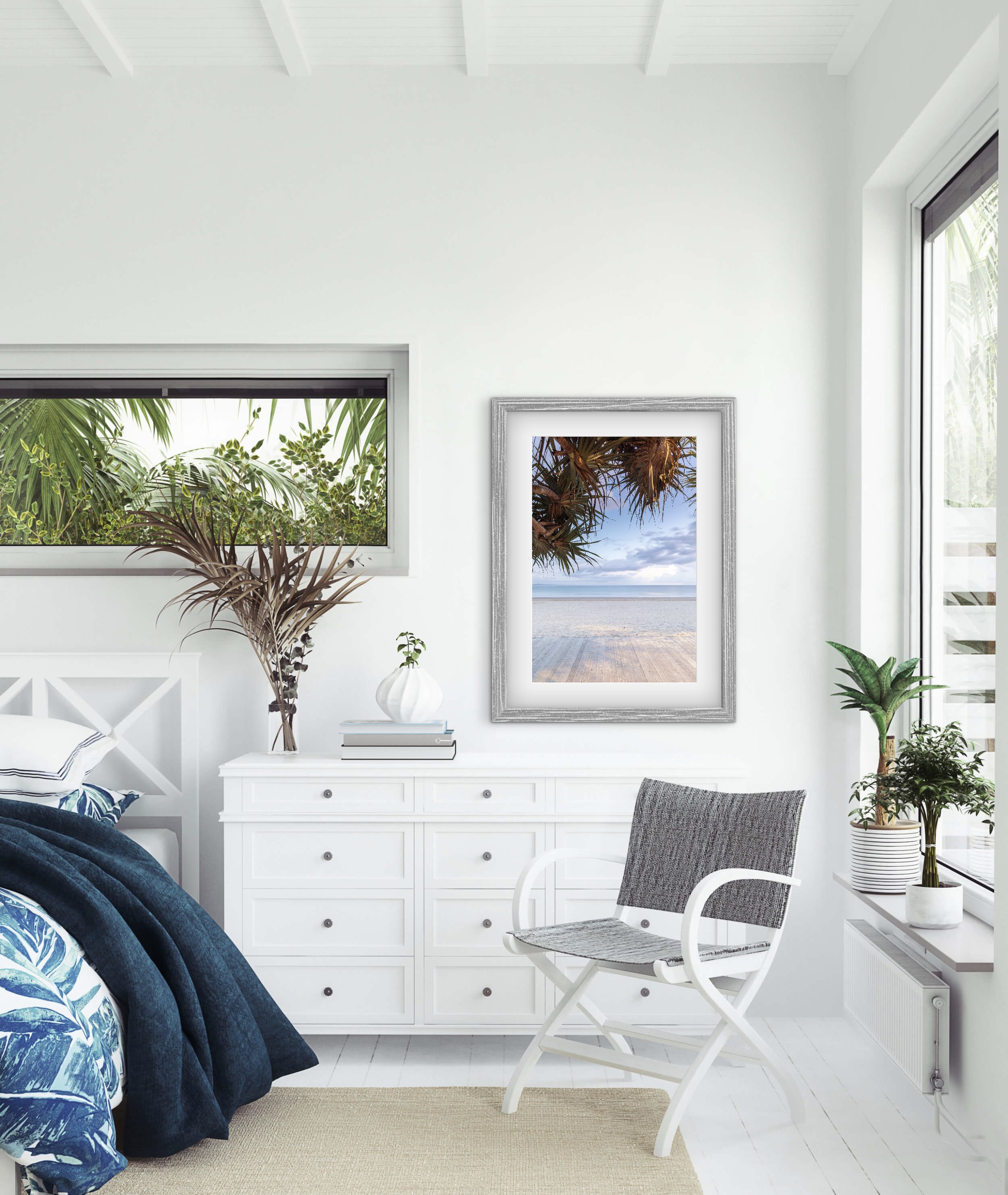
Coastal scenes like these Coolum and Sunshine Coast prints work beautifully above sofas or beds, creating a calm focal point without overwhelming the room.
Hanging art above a fireplace
Fireplaces are beautiful focal points, but artwork here is often hung too high.
Try:
Keeping the artwork closer to the mantel rather than drifting upwards
Choosing a slightly larger piece so it holds its own
Leaning artwork on the mantel for a relaxed, contemporary feel
If your living room feels busy with furniture, colour, or competing décor, one strong piece with space around it often creates more calm than several smaller works scattered across the room.
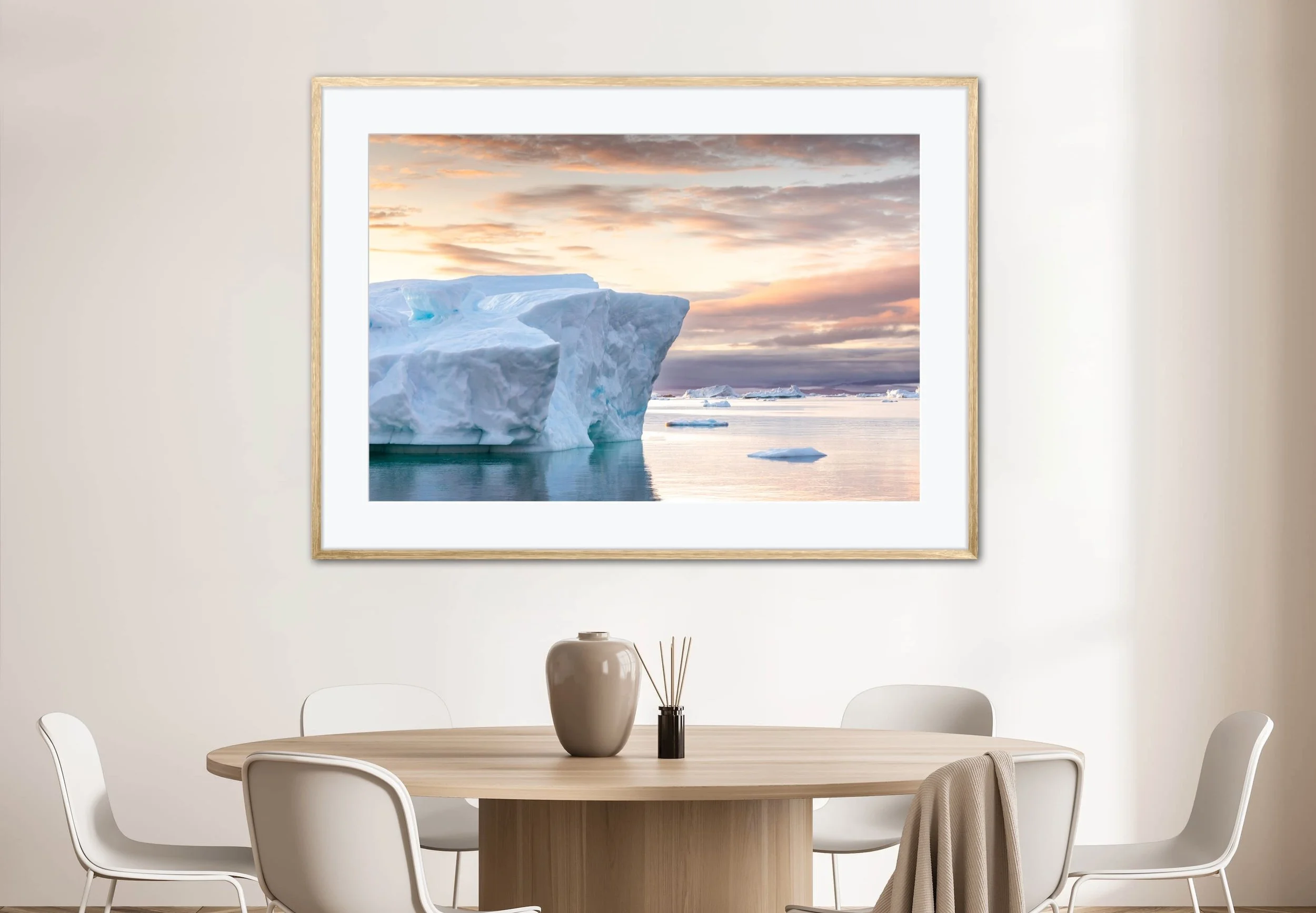
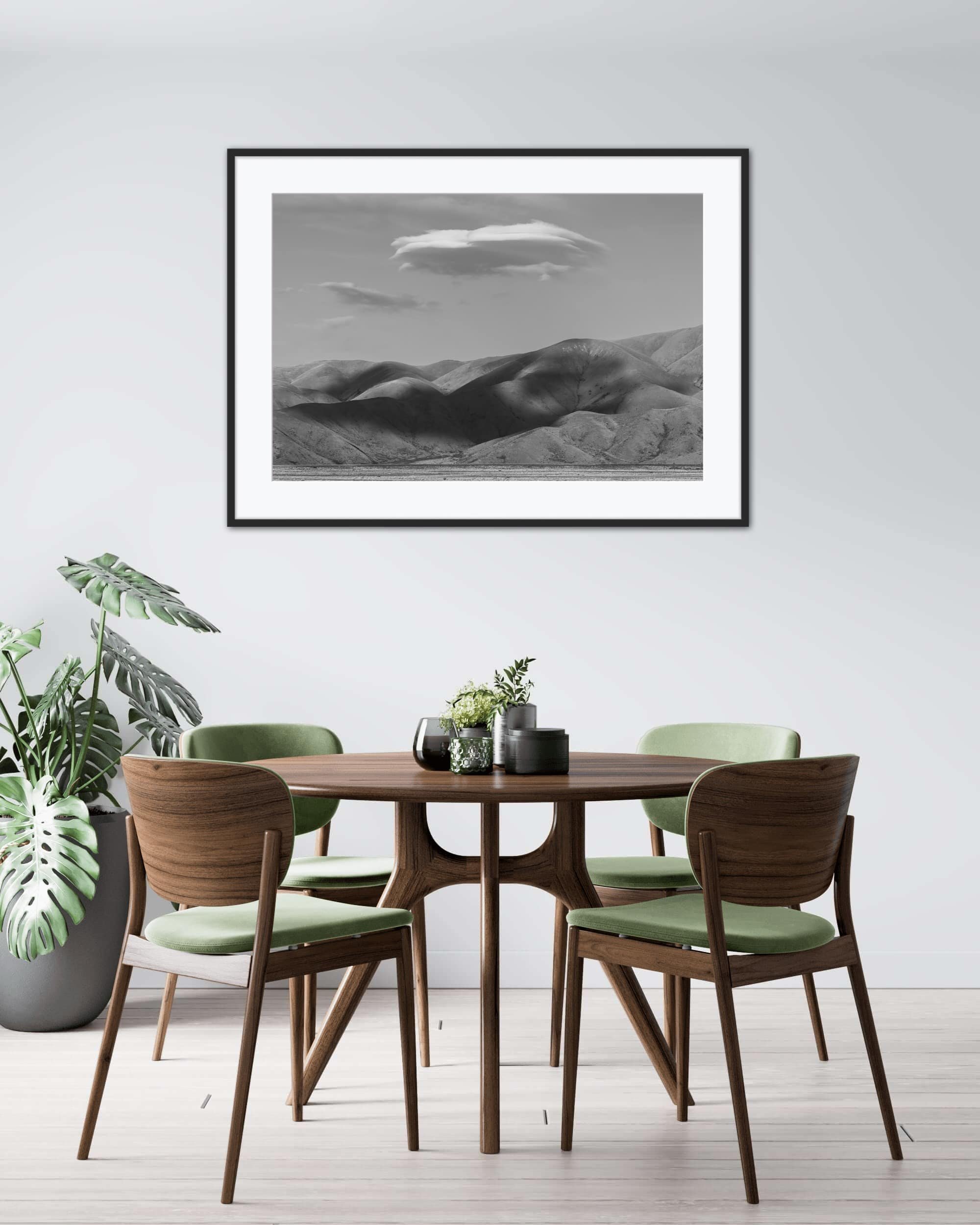
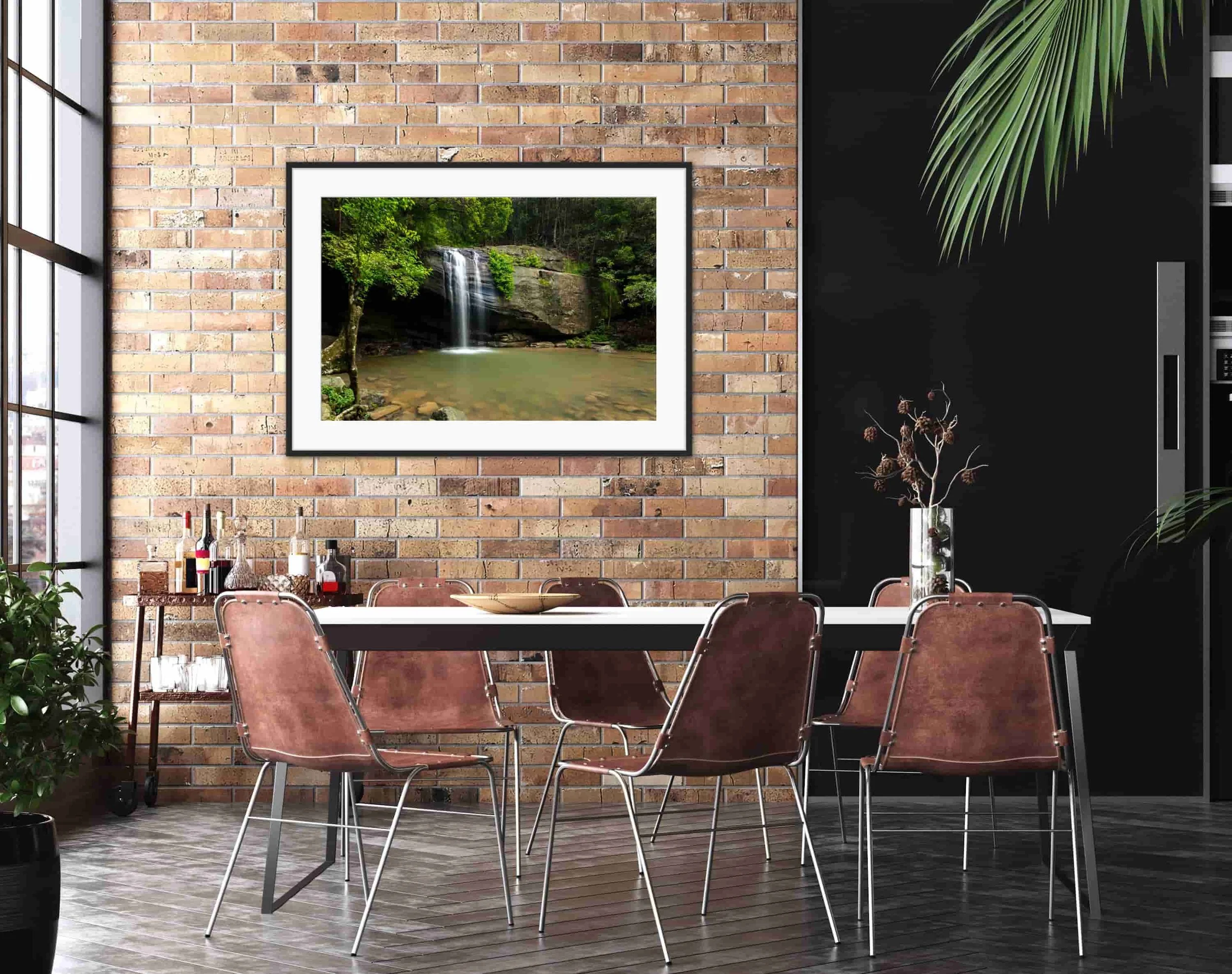
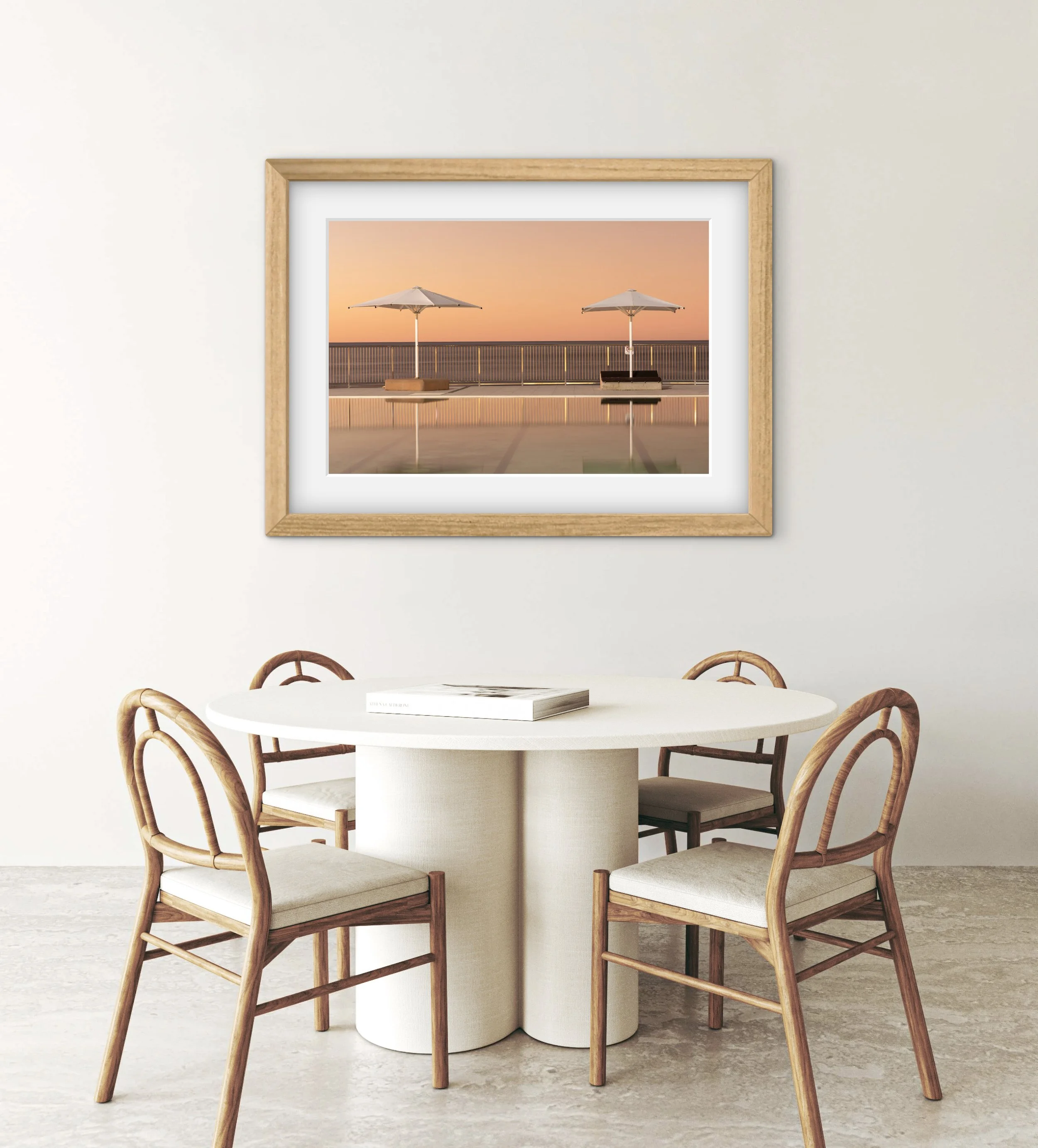
Dining Room Art Placement
Dining rooms respond beautifully to art because the furniture layout is usually centred and considered.
Where art works best in dining rooms
Above a sideboard
On the main wall visible from the dining table
As a pair flanking a mirror or feature
Dining spaces can handle slightly bolder imagery, such as urban scenes or strong black and white photography. Because people are seated, artwork can sit a little lower than in standing-only spaces and still feel balanced.
Kitchen Wall Art Ideas
Art can absolutely work in the kitchen, as long as placement is thoughtful.
Best spots for kitchen art
A blank wall away from the cooktop
A breakfast nook
Above a coffee station
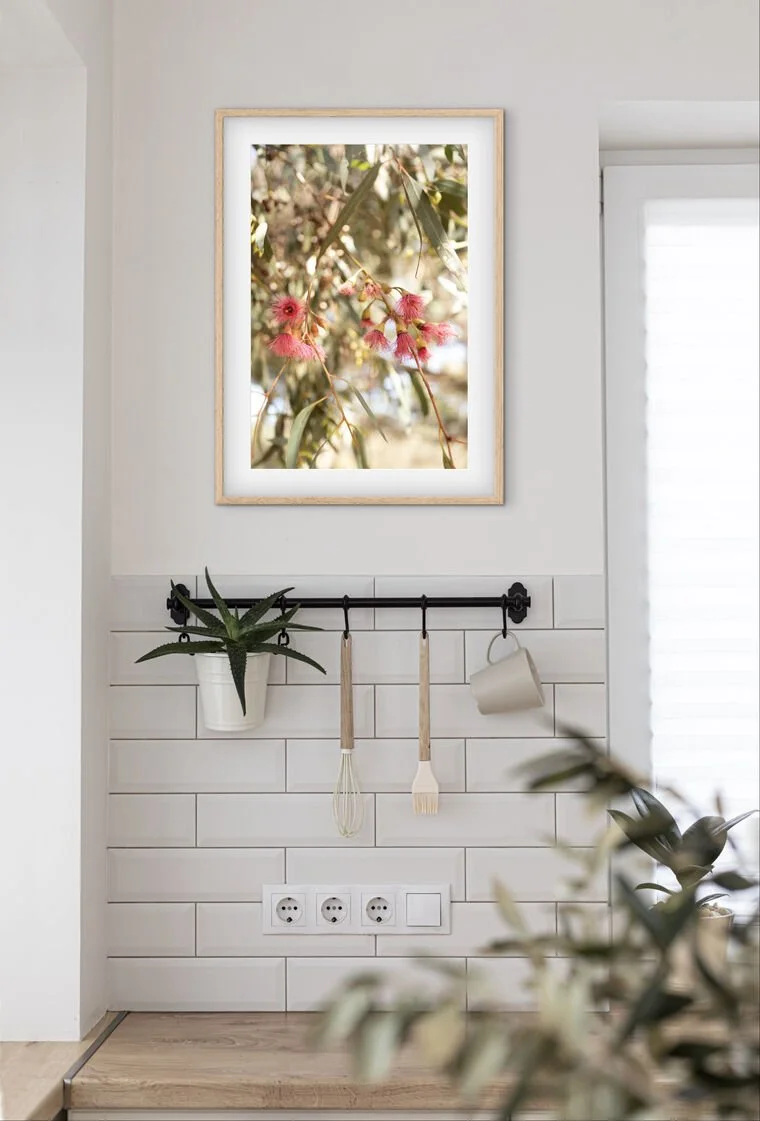
Avoid hanging art
Directly above sinks
Near the stovetop
In areas exposed to constant heat or steam
If you love the idea of fine art in the kitchen, framing with quality glazing and a well-sealed backing helps protect it. Otherwise, choose a drier corner where it can be enjoyed without worry.
Bedroom Art Placement for a Calm Space
This is one of the easiest rooms to make feel calmer with art.
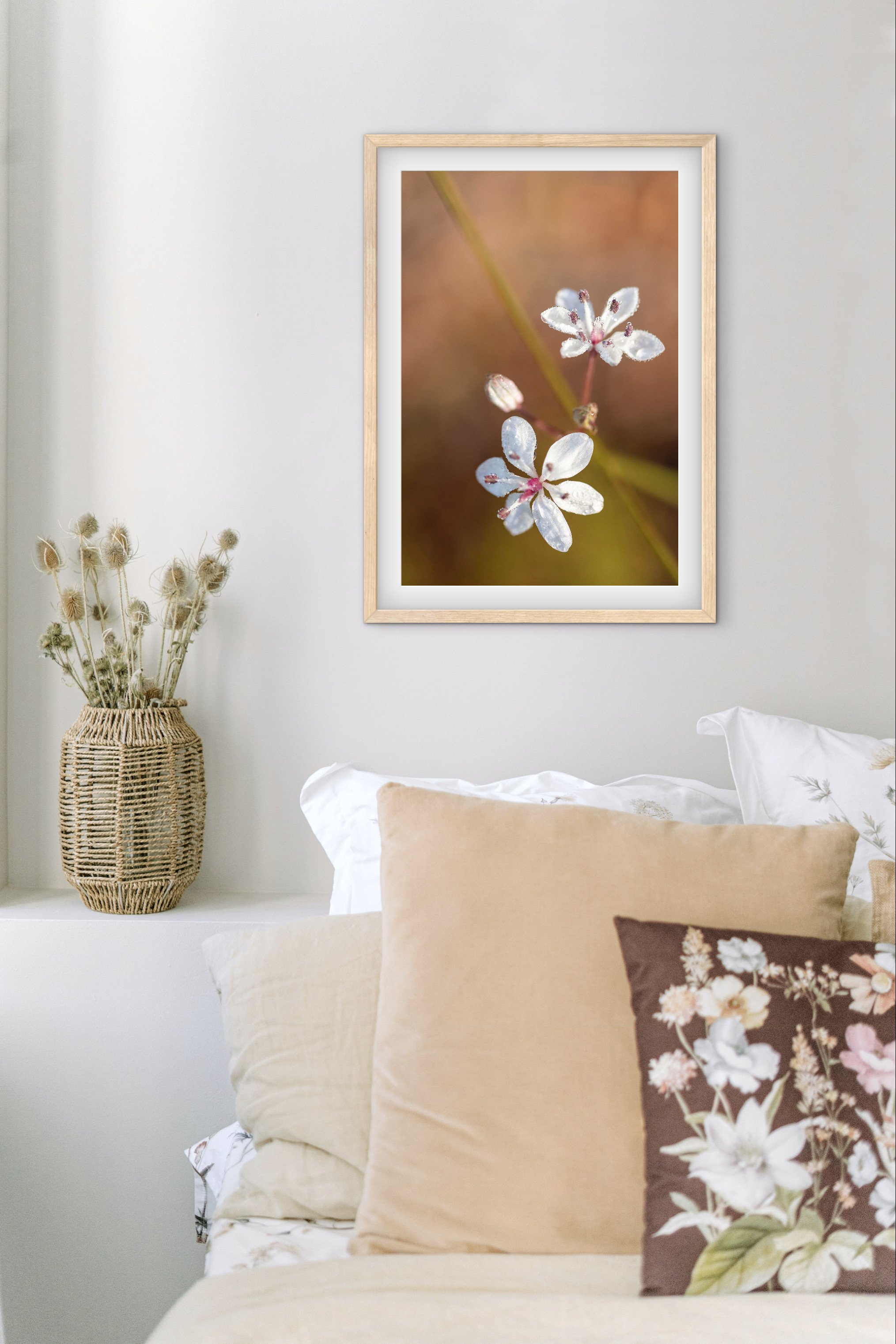
Where to hang art in the bedroom
Above the bed
On the wall opposite the bed
Above a dresser
As a vertical pair beside the bed
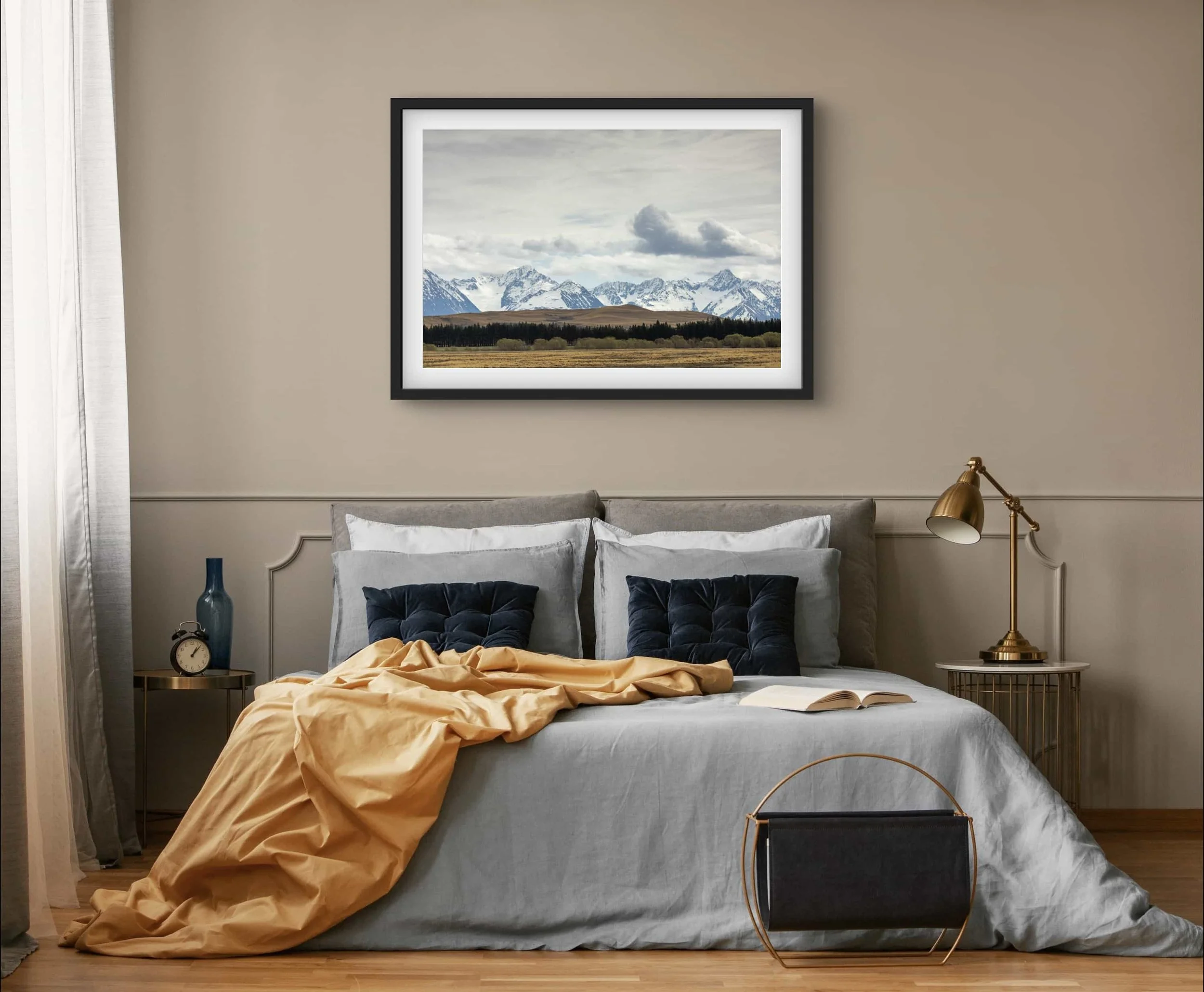
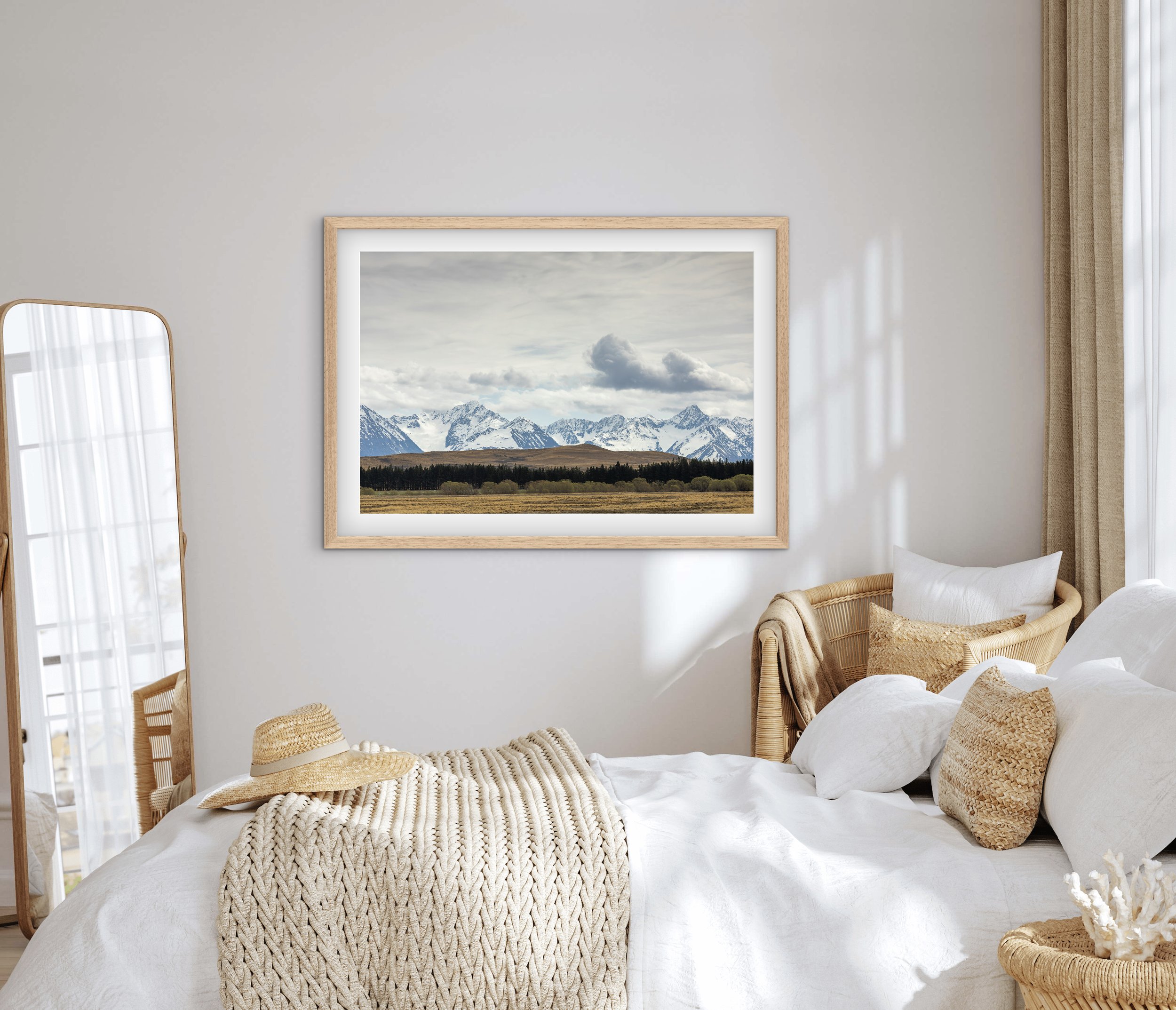
How to hang art above the bed
Aim for artwork around two-thirds the width of the bedhead
Leave 15–25 cm between the bedhead and the artwork
If there is no bedhead, hang slightly lower than you think, while keeping safety in mind
Bedrooms often suit imagery that feels quiet and spacious, such as coastal scenes, soft botanicals, or gentle black and white landscapes.
Bathroom Art Placement
Art can work beautifully in bathrooms, particularly powder rooms, but moisture matters.
Best places for bathroom art
Powder rooms
Walls away from the shower
Above towel rails, but not directly behind wet towels
Avoid placing unprotected artwork in areas with frequent steam. Powder rooms are usually the safest place to start.
Home Office Wall Art Ideas
This is one of the spaces that benefits most from art.
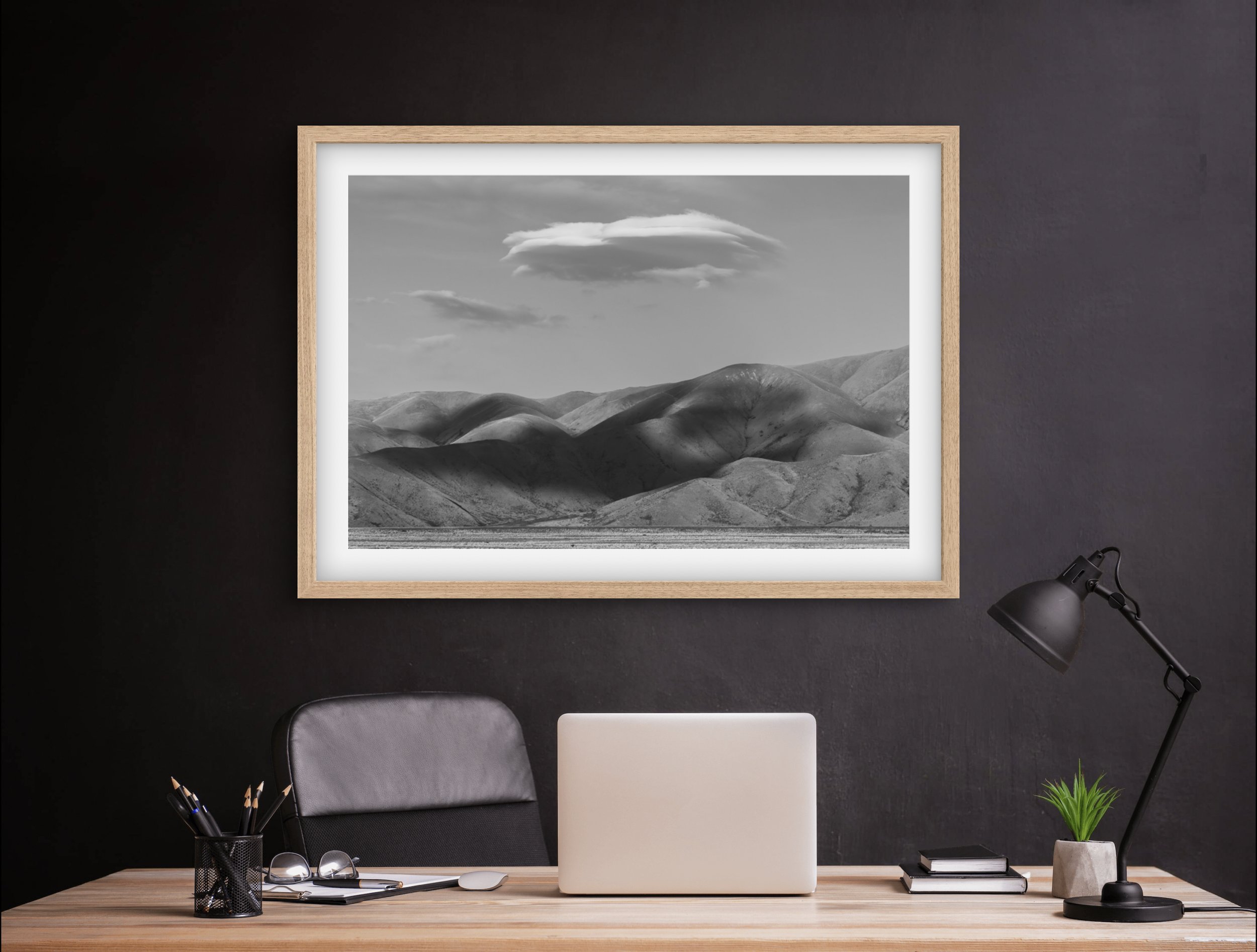
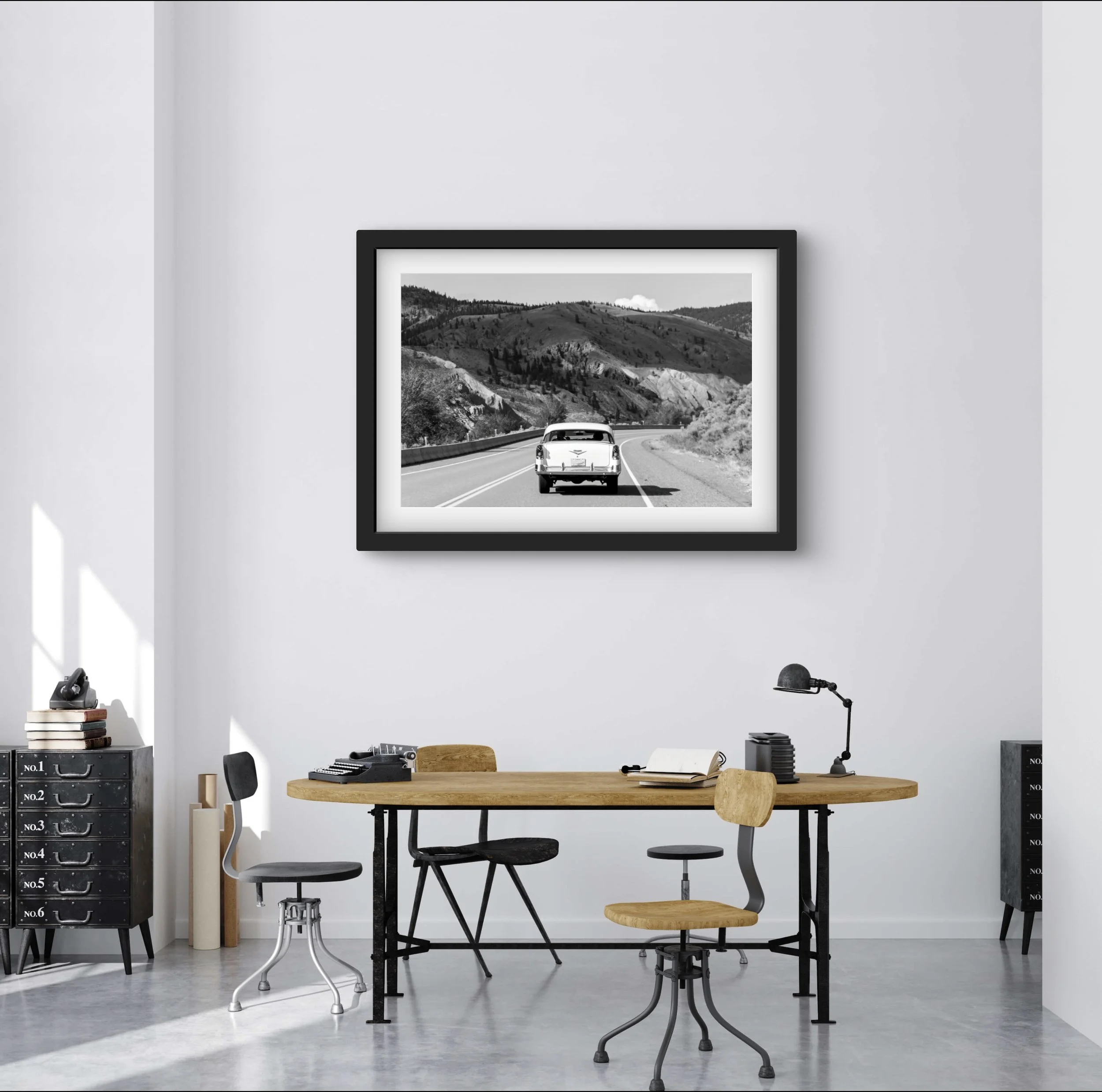
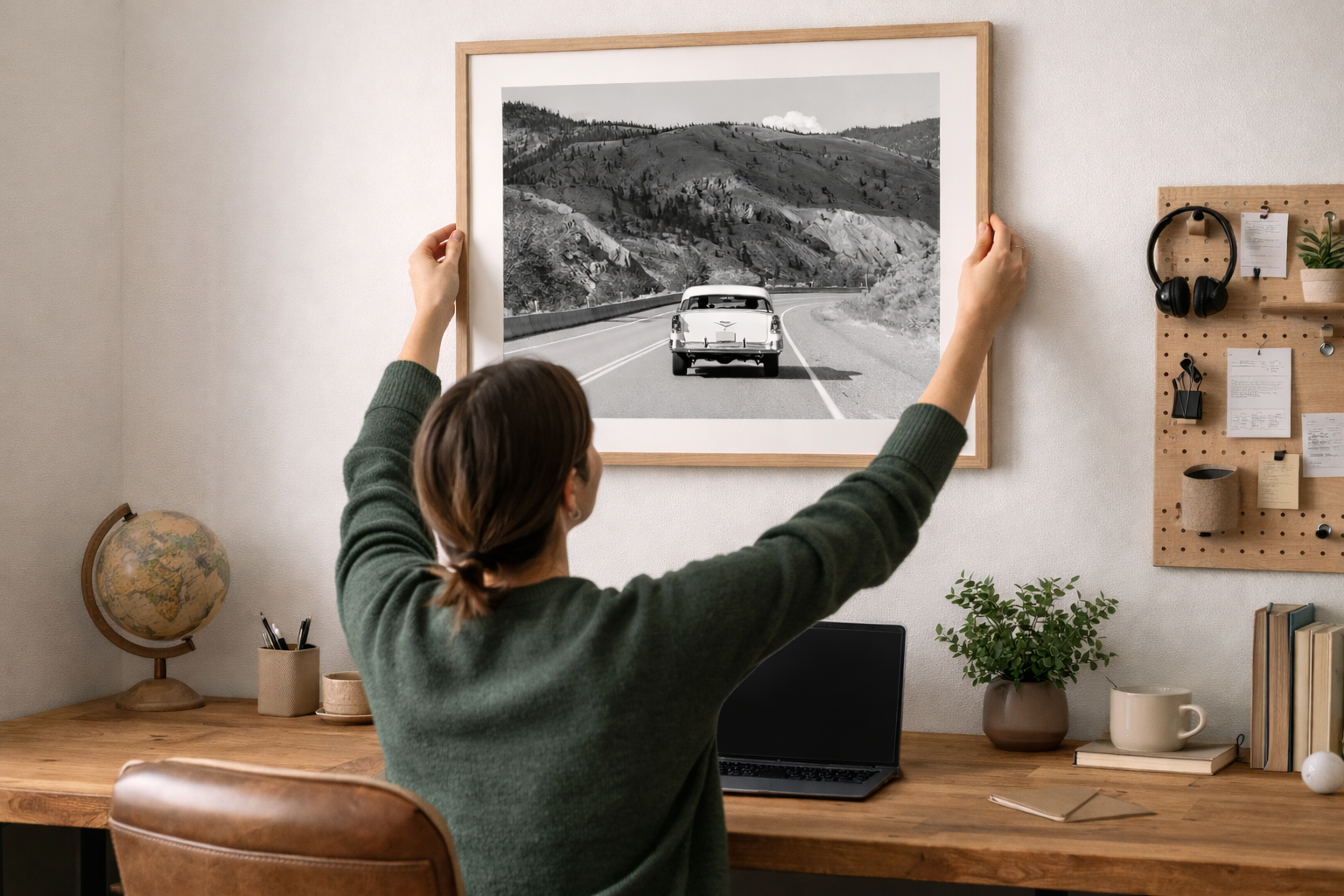
Where to hang art in a home office
Behind your desk, especially for video calls
On the wall opposite your desk
Above filing cabinets or shelves
Landscapes and travel imagery work especially well here, offering a visual pause without becoming distracting.
Staircase and Landing Art Placement
Stair walls are ideal for either flow or focus.
Two effective approaches
A gallery wall that follows the incline of the stairs
One tall statement piece on the landing
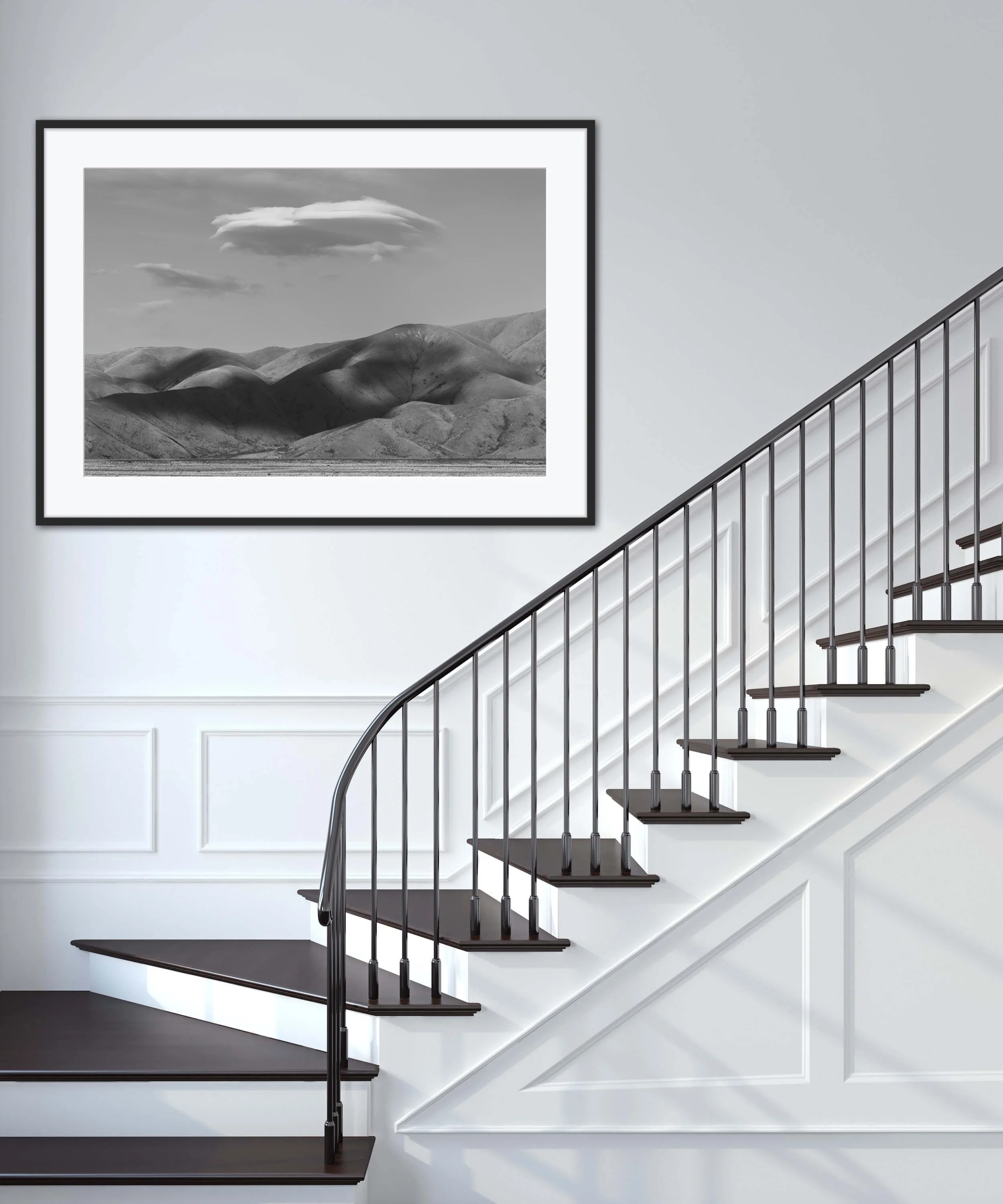
Consistent spacing is key, and paper templates or painter’s tape make planning much easier.
Children’s Room Art Placement
Art in children’s spaces does not need to be temporary.
Good placements
Above a reading nook
Beside the bed
Above a dresser
Nature imagery and simple landscapes often grow with a child and do not feel quickly outgrown.
What to Do With Awkward Blank Walls
Sometimes it is not about the “right” room, but the right wall.
Look for:
A wall you pass often
A wall visible from a doorway
A wall that still feels empty once furniture is in place
If you see it every day, it matters more than you think.
Common Art Hanging Mistakes (and Easy Fixes)
Hanging art too high
Lower it. Even 5–10 cm can make a noticeable difference.
Choosing art that is too small for the wall
Go larger, add a second piece, or use a wider mat when framing. If you’re unsure about proportion, this guide on choosing the right size for your space walks through scale and width in more detail.
Scattering artwork around the room
Create one or two intentional moments instead of many small placements.
Not relating art to furniture
Anchor it above or beside something grounded.
How to Plan Art Placement Without Committing to Holes
This simple method builds confidence:
Cut paper to the size of your artwork
Tape it to the wall
Live with it for 24 hours
Adjust until it feels effortless
If you are deciding between two locations, this approach usually makes the answer clear. This also helps if you are unsure about size, my guide Choose the Perfect Print walks through scale and proportion in more detail.
A Note on Framing Fine Art Prints
Fine art photography prints are often sold unframed, to allow buyers to choose frames that suit their space, budget, and long-term style. If you would like help deciding between framed or unframed, including what tends to suit different interior styles, read Framed or Unframed, Choosing the Best Display Option for Your Fine Art Prints. Framing becomes the final styling step.
Match frame tones to your space, such as natural timber, black, or white
Consider a mat to give the artwork breathing room
Use quality glazing in bright rooms
A frame does not need to be expensive to look beautiful. It simply needs to suit the room and give the artwork space to belong.
Final Thought
The best place for art is not always the most obvious one. It is the place where you will see it often, and where it makes your home feel more like you.
If you would like help choosing and placing fine art photography prints for a specific wall, even from a quick phone photo and a couple of measurements, I am always happy to help.
Author
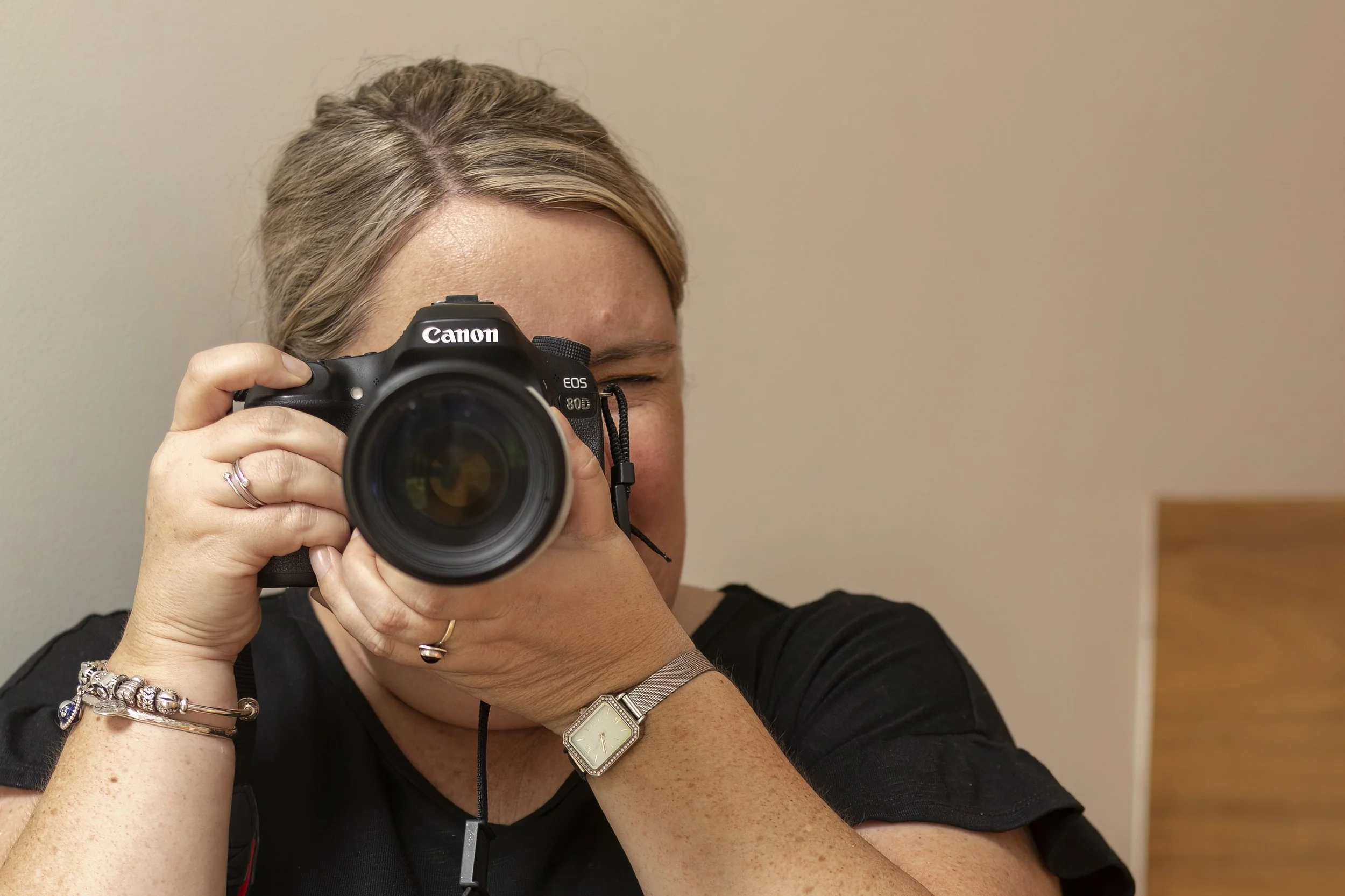
Leah Hermann is a landscape and travel photographer based on the Sunshine Coast, Australia. Through her brand Lens Art Images, she creates fine art photography prints inspired by coastlines, mountains, and destinations around the world, designed to bring a sense of place and calm into everyday spaces.