
How to Style Fine Art Photography in Modern Interiors
Modern interiors are often described as clean, minimal, and uncluttered, but the homes that feel most inviting are rarely empty. They are layered, intentional, and personal.
Fine art photography plays a unique role in modern interiors. It adds depth without heaviness, character without noise, and a sense of place without overwhelming the room.
Styling photography well is not about following trends or matching everything perfectly. It is about letting the artwork support the mood of the space, and giving it the room to breathe.
This guide focuses on styling fine art photography prints in modern interiors, artwork chosen to be lived with long-term rather than rotated with trends.
Quick Answer: How do you style fine art photography in modern interiors?
Fine art photography works well in modern interiors because it adds mood, depth, and a sense of place without creating visual clutter. Styling usually works best when artwork is given space, framed simply, and chosen for the feeling it brings to a room rather than trying to match colours exactly.
A single statement photograph, a restrained pair of prints, or a calm series with consistent spacing often feels more natural in modern interiors than a crowded wall.
Start with the feeling you want your space to reflect
Before thinking about frames, colours, or placement, consider how you want the room to feel when you walk into it.
Do you want the space to feel calm and grounding, light and open, reflective, or quietly dramatic?
Modern interiors often rely on a restrained palette and simple forms, which means artwork carries emotional weight. A coastal photograph can soften sharp lines, a black and white city image can add structure, and a landscape can slow the pace of a room.
Fine art photography works particularly well in modern interiors because it can communicate mood and meaning without adding visual clutter.
Choosing artwork based on feelings first makes styling decisions easier and more intuitive.
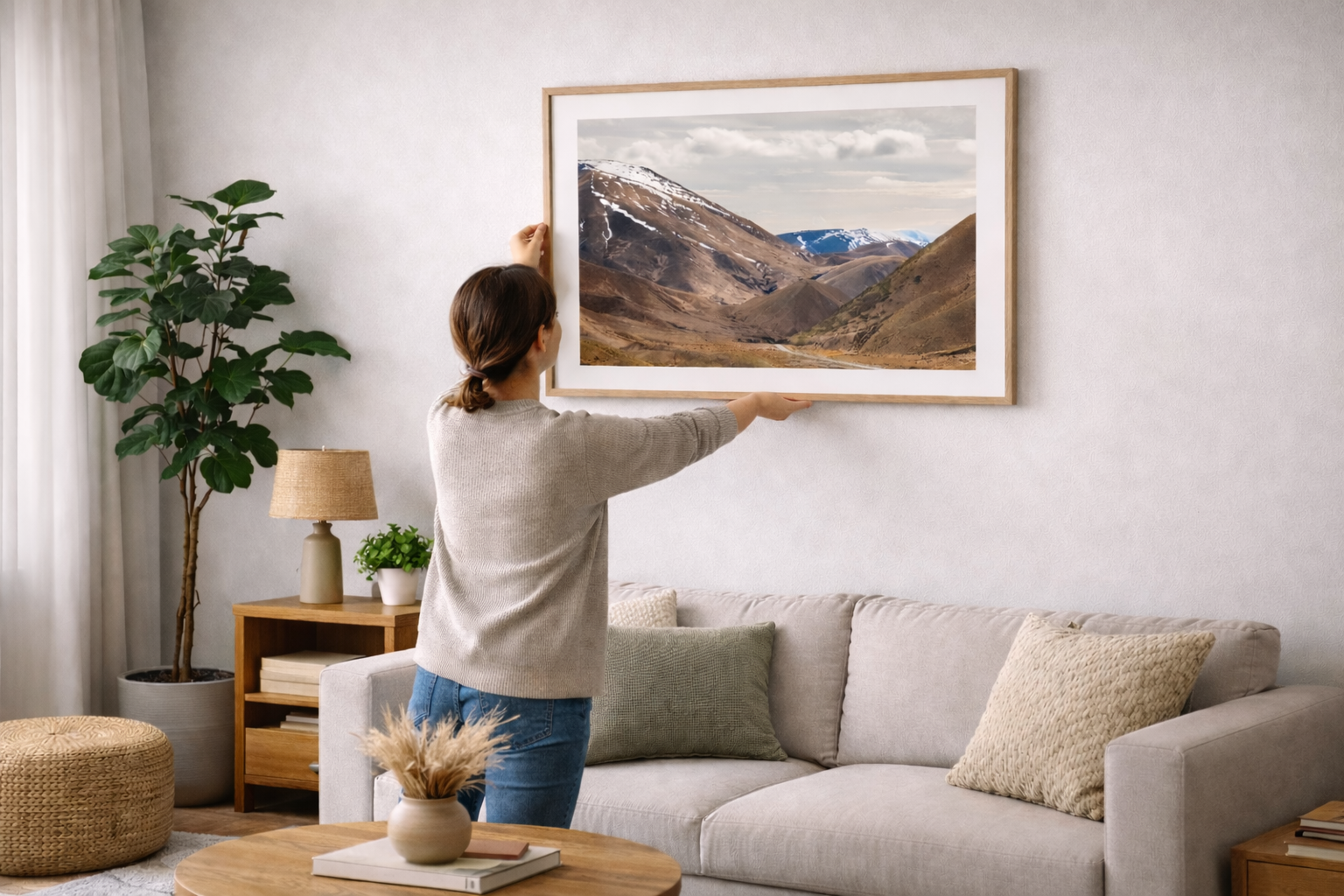
If you are still deciding where artwork works best in each room, this pairs well with the Where to Hang Art in Your Home: A Room by Room Guide.
How to style fine art photography in minimalist interiors
Minimalist spaces benefit from restraint. In minimalist homes, fine art photography often has more impact when it is given space rather than surrounded by additional décor.
One of the most common mistakes in modern homes is filling walls too quickly. Often this happens when artwork is chosen before considering scale. If you are unsure how large a print should be for a space, the guide How to Choose the Right Size Wall Art for Your Space can help clarify what tends to work best. In many cases, a single strong piece of photography will have more impact than multiple smaller works competing for attention.
If you are styling a large wall, consider:
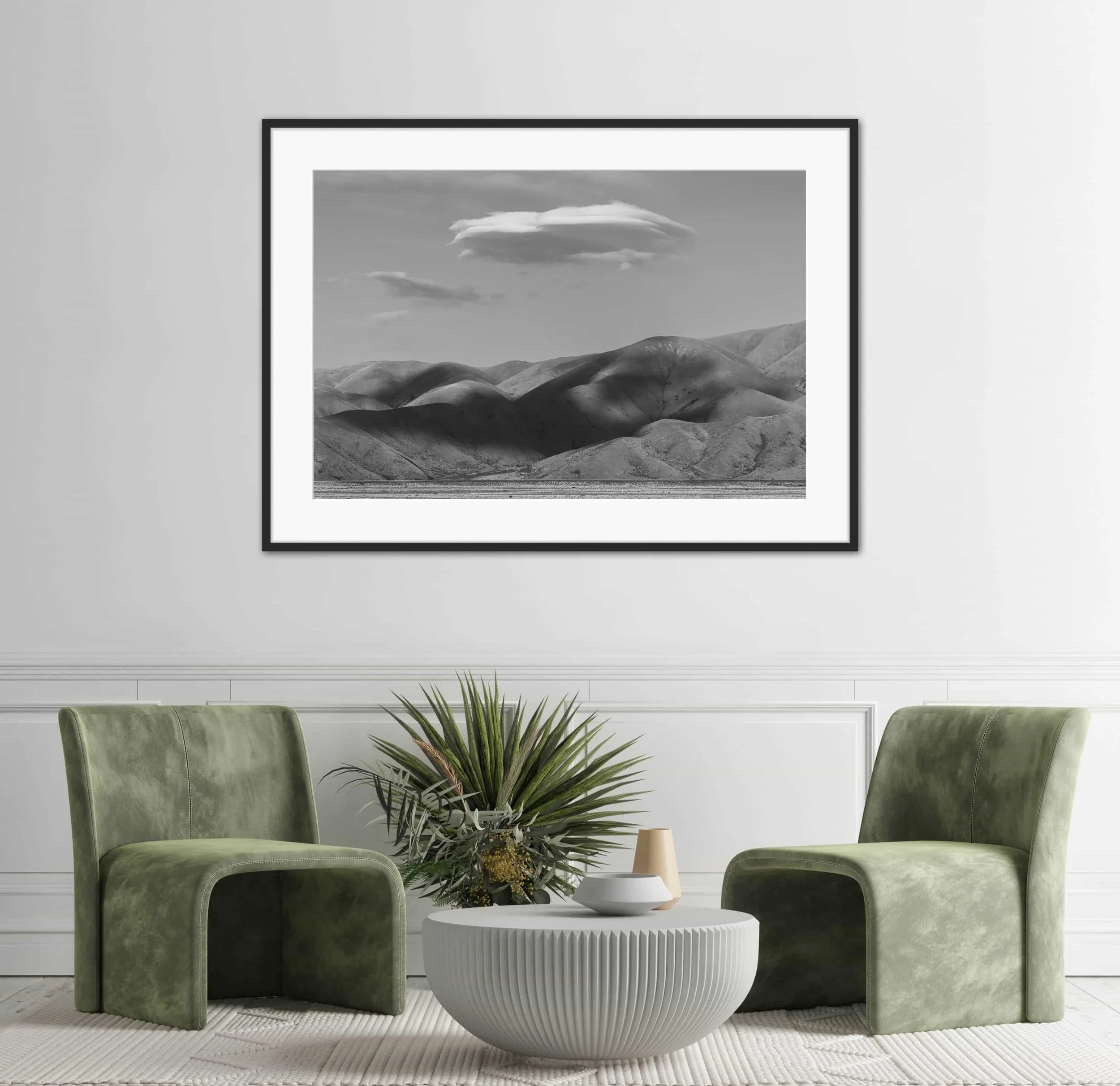
• One statement print centred above a sofa or console
• A pair of matching or complementary prints with generous spacing
• Leaving surrounding walls intentionally bare
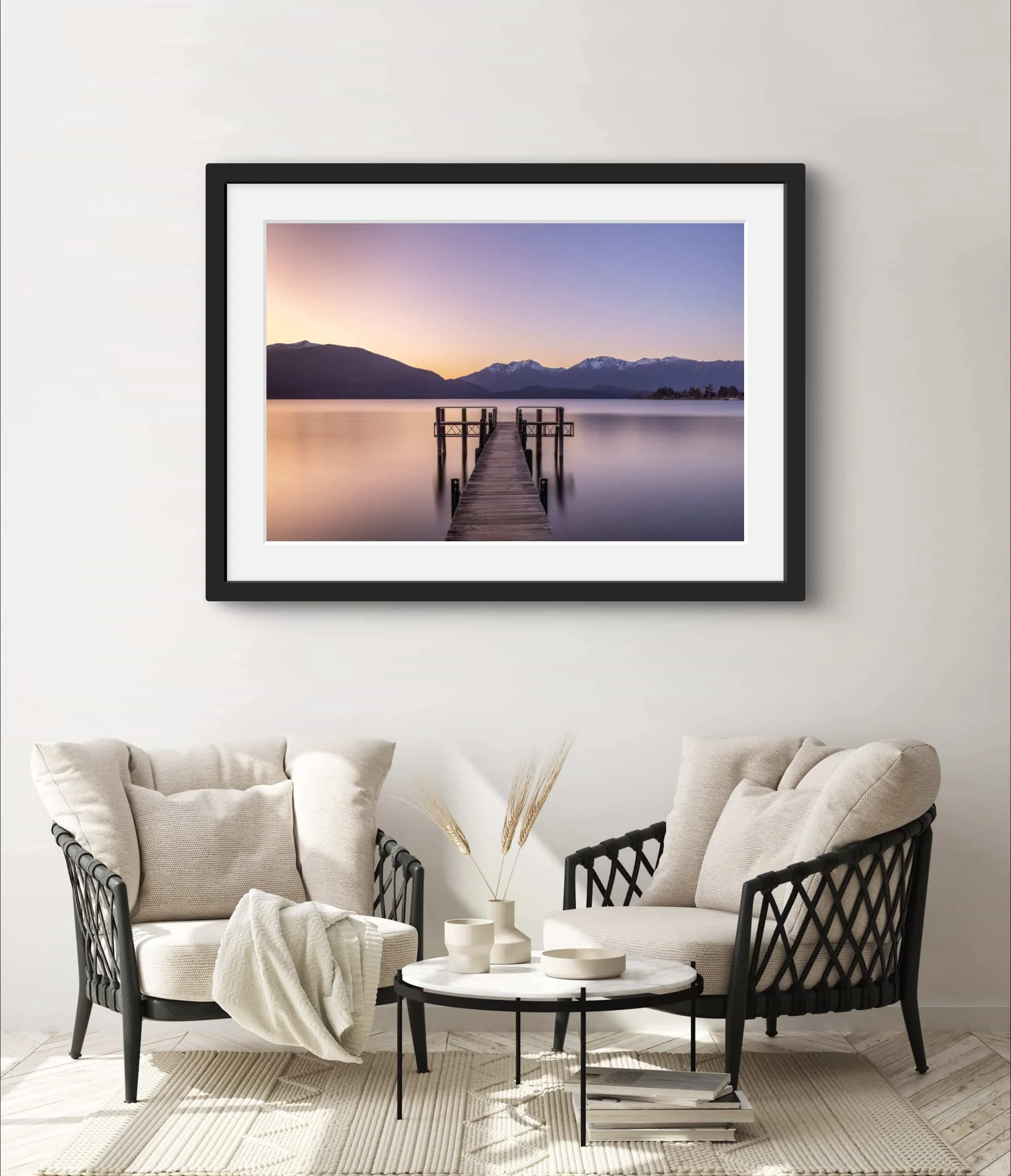
White space is not wasted space. It allows the artwork to feel intentional rather than decorative. Soft, open landscapes such as coastal photography prints from the Sunshine Coast can help create a sense of space while keeping the room feeling calm and uncluttered.
Using colour in modern interiors without overwhelming the space
Modern interiors do not require artwork that matches the room exactly.
Instead of literal colour matching, look for subtle colour echoes.
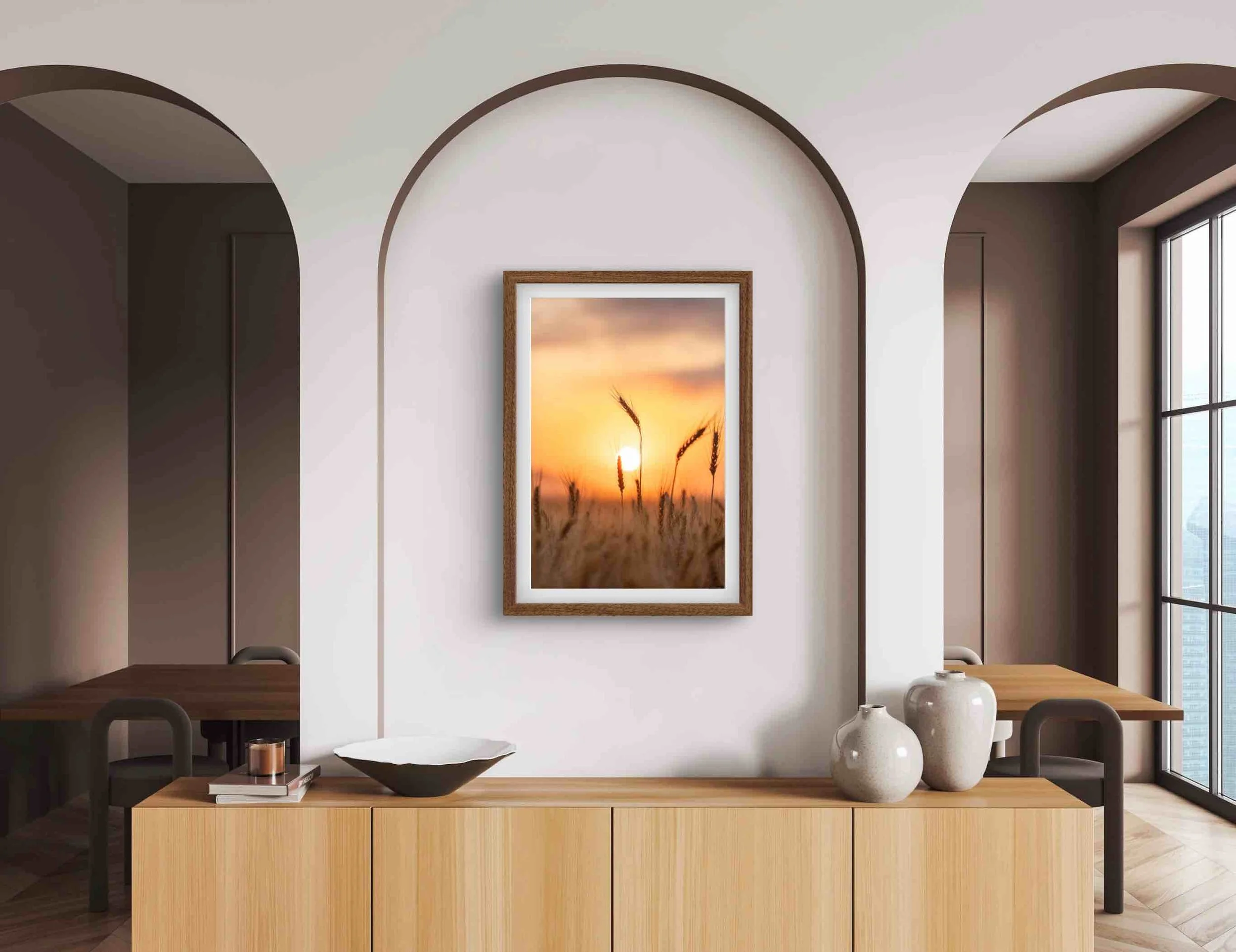
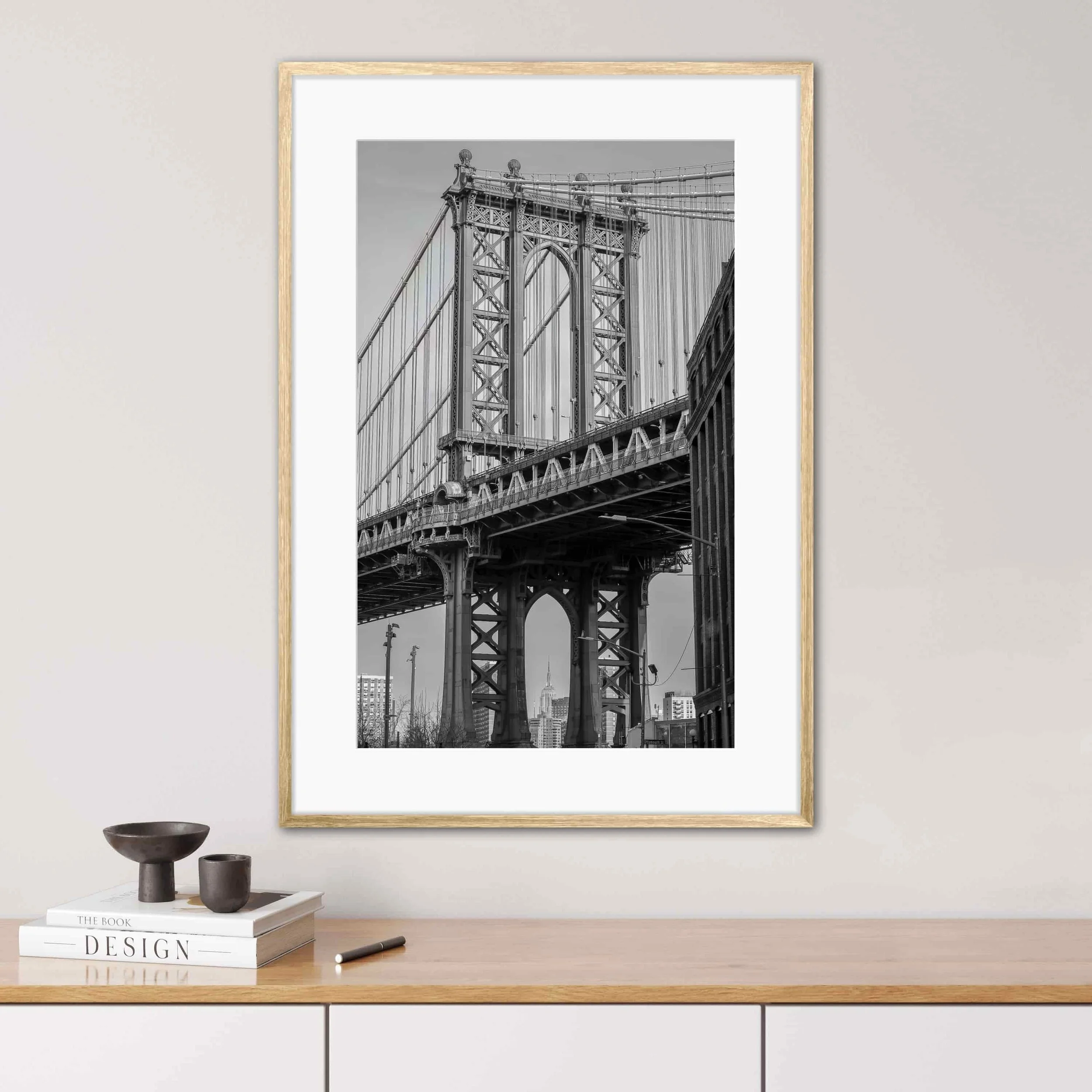
Nature and landscape photography with soft blues can work beautifully in a neutral room with timber and linen. Muted greens sit comfortably alongside indoor plants and natural textures. Black and white photography anchors spaces that feel visually light or unfinished.
Thinking in terms of undertones rather than exact matches keeps the space cohesive without feeling styled.
Choosing frames for fine art photography in modern homes
Frames should support the artwork, not compete with it. Fine art photography prints are often sold unframed to allow the framing choice to suit the interior, scale, and personal style of the space.
In modern interiors, simple framing choices tend to work best.
Reliable options include:
• Thin black frames for contrast and definition
• Light timber frames to add warmth to neutral rooms
• White frames for an airy, understated look
A wide mat is often just as important as the frame. It creates visual breathing room and helps elevate the artwork without adding clutter.
If you are weighing up presentation options, you may find Framed or Unframed Prints: What Works Best for Your Space helpful here.
Creating balance between wall art and furniture
Fine art photography rarely exists in isolation. It interacts with furniture, lighting, and surrounding objects.
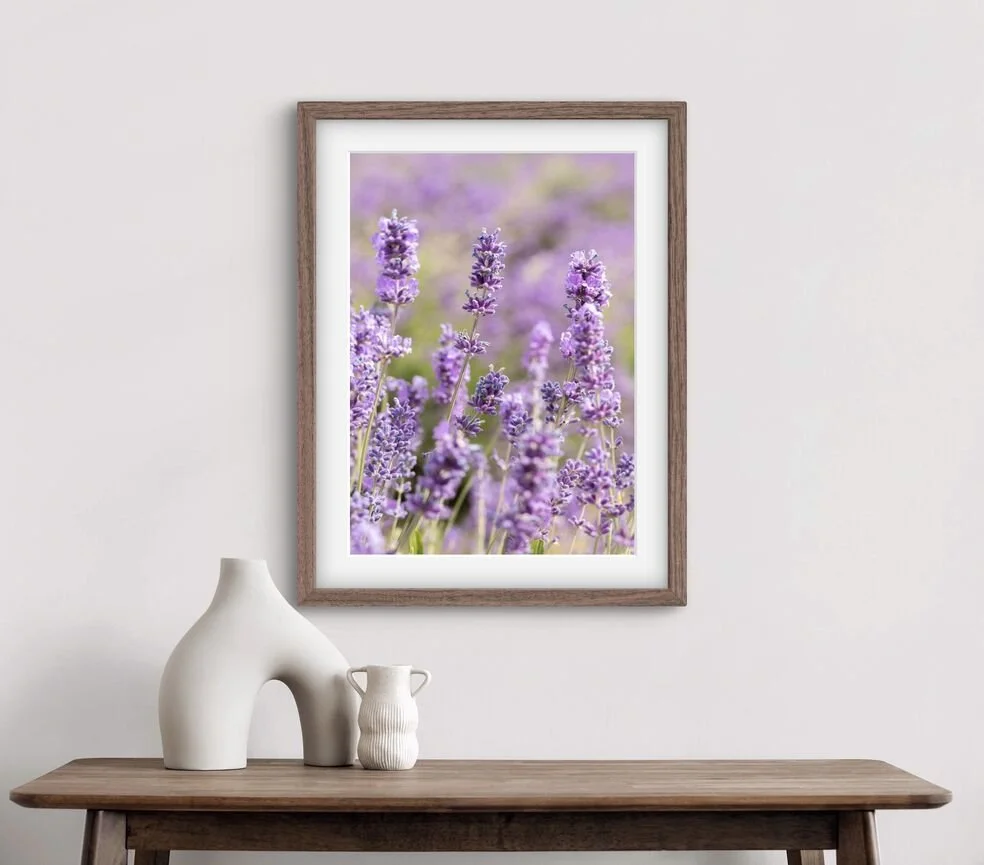
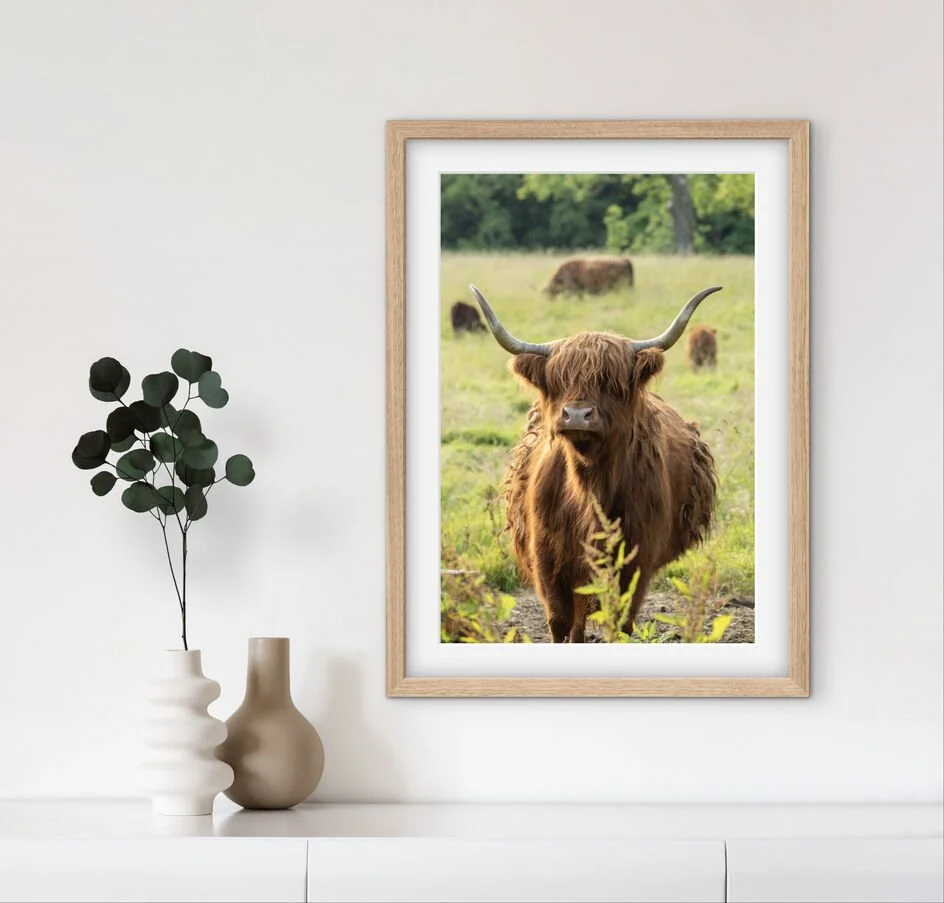
In modern interiors, balance often comes from grounding artwork with furniture rather than surrounding it with décor.
A print hung above a sideboard or console feels more anchored than one floating on an empty wall. A photograph leaning on a shelf alongside one or two considered objects can feel relaxed and lived in.
Avoid over styling. One or two complementary elements are usually enough.
Styling black and white photography in modern interiors
Black and white fine art photography is especially well suited to modern interiors because it adds structure and contrast without introducing additional colour. It adds emotion without visual noise.
In light filled rooms, black and white prints create contrast and focus. In darker or moodier spaces, they enhance depth and atmosphere.
They are especially effective in hallways, stairwells, bedrooms, and home offices, spaces where calm and clarity matter most.
Gallery walls in modern interiors, when and how they work
Gallery walls can work beautifully in modern interiors when they are approached with restraint.
Keep spacing consistent, limit the number of frames, and stick to a cohesive colour palette or subject matter.
A series of photographs from the same place or with a similar tone often feels calmer than a mix of unrelated images.
If you are unsure, fewer pieces with more space between them will always feel more modern than a tightly packed wall.
For practical spacing and placement guidance, refer back to How to Choose the Right Size Wall Art for Your Space.
Let your interior style evolve with your artwork
The most successful modern interiors feel personal rather than finished.
It is completely natural to move artwork over time. A piece that starts in the living room may eventually find its place in a hallway or bedroom.
Styling fine art photography is not about getting everything right immediately. It is about creating a home that feels calm, intentional, and reflective of the places and moments that matter to you. In modern interiors is less about finishing a room and more about allowing it to evolve over time.
When artwork feels at ease in a space, the room usually does too.
FAQ
What type of art works best in modern interiors?
Fine art photography works particularly well in modern interiors because it adds visual interest and emotional depth without cluttering the space. Landscapes, coastal scenes, and black and white photography often complement modern interiors with clean lines and neutral palettes.
Should wall art match the colours in a modern room?
Artwork does not need to match colours exactly. Subtle colour echoes or complementary tones usually create a more natural and relaxed look than exact colour matching.
Are gallery walls suitable for modern interiors?
Yes, but they tend to work best when restrained. Using a small series of photographs with consistent spacing, similar tones, or a shared theme often feels calmer and more cohesive than a large mixed gallery wall.
Author
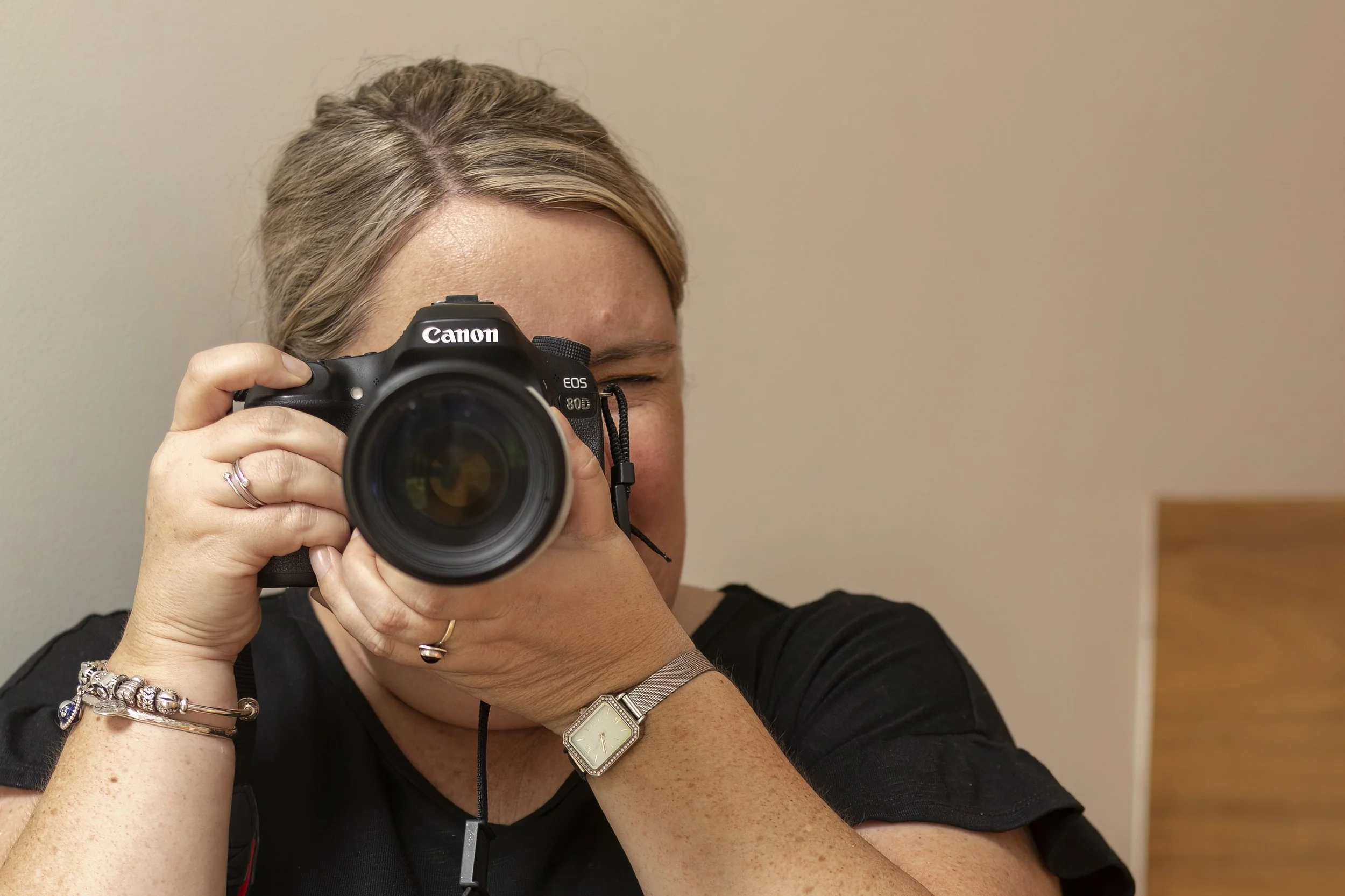
Leah Hermann is a landscape and travel photographer based on the Sunshine Coast, Australia. Through her brand Lens Art Images, she creates fine art photography prints inspired by coastlines, mountains, and destinations around the world, designed to bring a sense of place and calm into everyday spaces.